
An antiques dealer friend was reflecting on her clients’ buying habits recently. ‘No one gives a f***k about provenance, or the stories behind an object, anymore,’ she confided. ‘It’s all about whether something will look good in their home.’ This made me think. Was my friend’s gloomy outlook justified and did her clientele’s preference for style over ‘stories’ reflect a growing lack of interest in the past? Was it part of the wider, cultural dumbing down that is currently provoking so much hand-wringing among the chattering classes? Or is the reality more nuanced than that?
Certainly, the way in which we acquire antiques, be it paintings, furniture or art, has changed in recent decades. Experts agree that the days of the serious collector, fixated by a niche category, are numbered. ‘When I started in the business, I’d meet people who focussed on one particular area,’ says Thomas Jenner-Fust of Chorley’s Auctioneers, in Gloucester. ‘It might be silver with a Chester hallmark, or Barbizon School paintings. They’d buy every single one of those things that they could find. Nowadays, taste is more varied and people seem to care more about how things look. We haven’t quite got to the stage where everyone’s buying their antique to match their wall colour,’ he says. ‘But who knows.’
Dealer Adam Bentley agrees. ‘I think we are seeing the last vestiges of the great collector,’ he says, citing one enthusiast, who built an extension to house his sprawling collection of early English oak furniture. ‘People don’t buy in the same way; they have to like something, or it might suit their interior… The purists are a dying breed.’
So too, the connoisseur; the erudite, exacting individual steeped in the knowledge of
their chosen collecting field, be it Imari porcelain or portrait miniatures. ‘That has left
various branches of the decorative arts withering slightly: you wonder if that
knowledge will be replaced,’ observes Thomas.
And what of provenance? Is that still important? In the past, it did matter if a console had been acquired by Lord Ponsonby-Snooks for the morning room of his decaying Jacobean manor in 1812. Dates, places and aristocratic personages, cross-referenced in books or the pages of Country Life, added an aura of prestige, and tangible value.
Today, we are less interested in a connection ‘with a grand country house, or significant collector,’ says Thomas. Now, it is often about celebrities. Take the 2023 sale of musician Freddie Mercury’s belongings at Sotheby’s where acolytes ‘queued around the block,’ for a glimpse of his Tiffany moustache comb or garden door. Next month, Bonhams is auctioning off the actor and architecture enthusiast Diane Keaton’s possessions; including a metal storage cabinet filled with ‘books and curiosities.’ At Foster & Gane, in Oxfordshire, a set of carved limestone panels, made for fashionable mid-century designer André Arbus, ‘are like a time machine, with an irresistible back story,’ says owner Val Foster, ‘transporting’ us to a more glamorous era.
In recent years, many dealers have migrated online also selling their wares on social media. Antiques have never been more accessible – which is a good thing. But, I also wondered if this might be contributing to a preference for looks, over history? And a carelessness about facts, and details?
Instagram, for instance, may be awash with historical gems, but is anyone bothering to pause and read the posts which describe them before moving on to the next one? (Judging by the lacklustre response to my own: no). The same might be said for those ‘expert’ videos, featuring tweed-clad types against bookshelves, currently filling my feed. Who has time to watch them?
It is not our shrivelling concentration spans that are to blame for this apparent lack of curiosity – it is the result of what behavioural scientist Lea Karam, founder of Mindscope, calls ‘filtering’. ‘Audiences didn’t lose attention; human crave stories. But the algorithms encourage us to develop sharper filters which mechanically decide what is relevant or not,’ says Lea who is currently working with Pinterest and Snapchat to develop more ‘creative’ routes to engagement. ‘Every swipe is a micro-decision, training a reflex to move on,’ she says, ‘unless something is instantly resonant.’
I remembered my own, analogue, introduction to art history. I was revising for GCSE’s in the library when I spotted a book about Le Corbusier, its spine protruding, tantalisingly, over the edge of a shelf. Most of its contents went over my head. And yet, poring over the grainy, black and white photos of his Modernist villas and buildings, I began to learn how buildings, and objects, can embody ideas and philosophies. Until then, I’d been taught to value ideas, and theories, over things…stuff. Discovering that book was, with hindsight, a revelation. After that, I wanted to know more.
And, unlike my friend, I feel optimistic. Buying habits may have shifted, but the appetite for stories and knowledge about the past is alive, and flourishing. Val Foster concurs: ‘Often it’s the story behind the piece that seduces the new owner,’ she says. ‘It’s what animates an otherwise inanimate object.’
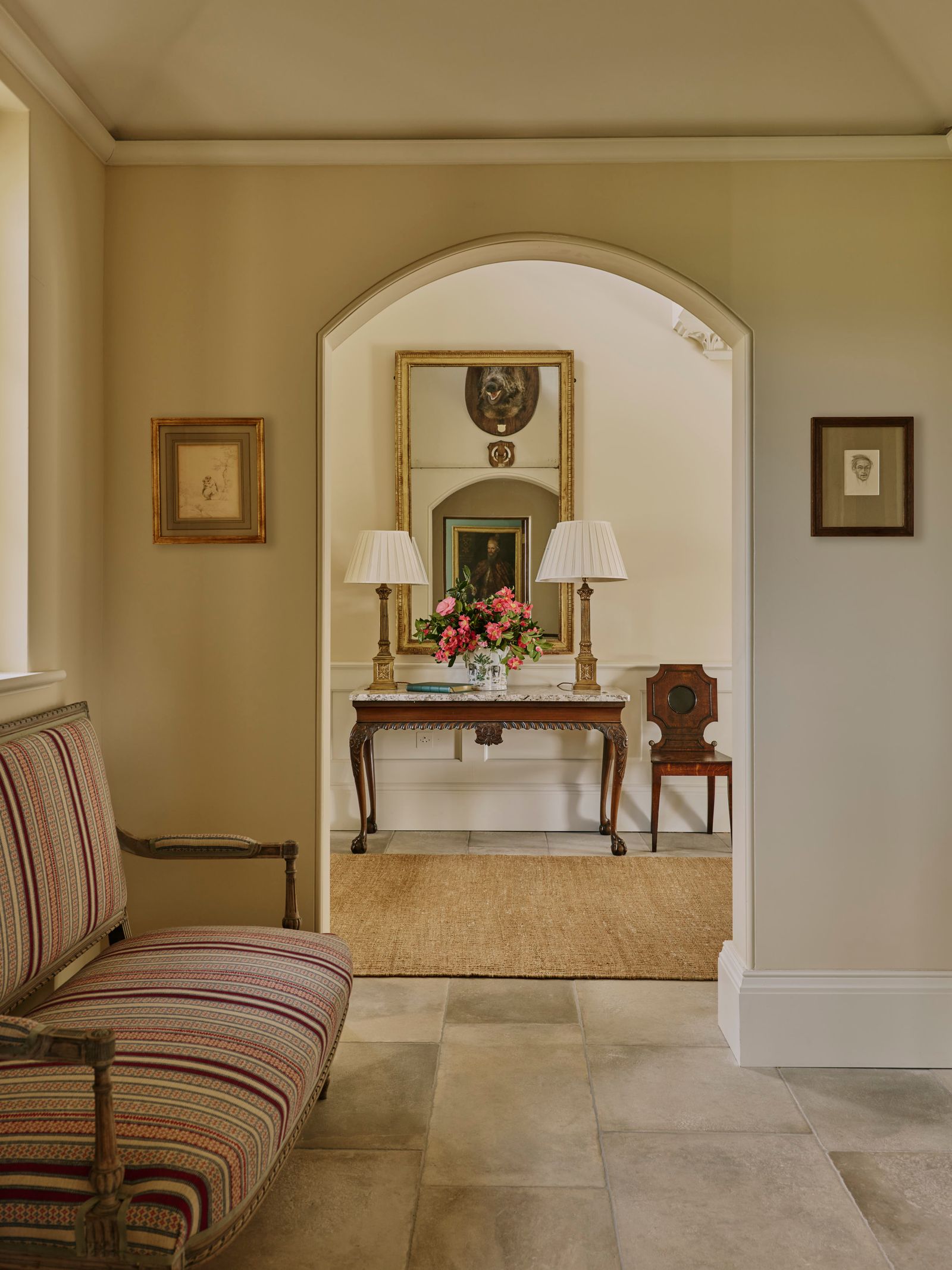
For further proof, look to the latest generation of antiques or art dealers like Molly Alexander, Toby Ziff, Milo Dickinson, Adam Bentley or Rebecca Christie-Miller. Some, like Milo, who grew up with an art-collecting father, or Molly, whose aunt Min Hogg was a founding editor of the World of Interiors, were born to deal in the past. At Foster & Gane, Val’s son Ed has also joined the business. Others, like Toby, a photographer, who taught himself about art and antiques through books, are autodidacts.
While many of their peers have swapped bricks and mortar for online shops, this new cohort is doing the opposite. Molly has just opened a new, black-fronted shop in Pimlico (‘who wouldn’t want to shop there? She’s young, she’s fun – and she knows her stuff,’ one designer told me); Rebecca is dealer in residence at Ben Pentreath, Toby has a showroom in Hampstead and Adam presides over is own, large space in Battersea.
For all of them, having a physical presence is important. It is here that what Toby calls the ‘theatre’ and ‘magic’ of antiques-selling happens; those exchanges of facts and stories which linger in the imagination. ‘You remember the conversations you had with a dealer. It adds to the enjoyment of owning a piece. People do really respond to that,’ says Toby. ‘I can’t see it going away.’


