
Art exhibitions in London: everything you need to see in April 2026
The word ‘April’ is from the Latin aperire, meaning ‘to open’. It’s assumed to refer to the seasonal blooming of nature – and certainly, there’s nowhere like our capital city in spring, when the parks become showcases for the wonderment of renewal, and cherry blossom adorns the streets. But the word could equally apply to the outstanding art exhibitions in London this month – as well as, excitingly, an entire new museum. The galleries at V&A East explore the power of creativity via the people and ideas that are shaping global culture, and the inaugural exhibition is a multi-sensory celebration of music.
This month also sees Easter, a celebration of the triumph of life and new beginnings – and an exhibition at the Royal Academy is resurrecting a name from the mists of time, and bringing us the works of Michaelina Wautier, who was a contemporary of Artemisia Gentileschi, and whose portraits and religious scenes come accompanied by an extraordinary tenderness. Then, at Serpentine South is a new body of work by Cecily Brown, whose vivid paintings blur the line between abstract and figuration. Tate Britain is hosting the first major show devoted to Hurvin Anderson – vast landscapes and interior scenes merge his diasporic identity with art historical tradition to magnetic effect. And Dulwich Picture Gallery is mounting the first show in this country to focus on the great Estonian artist Konrad Magi, whose avant-garde style was inspired by the movements of neo-Impressionism, Expressionism, and Cubism.
Meanwhile, within our commercial galleries, are exhibitions that offer fascinating insight into time, place, and particular aspects of an artist’s career. Victoria Miro, N1, is holding the most comprehensive show to date of Paula Rego’s drawings. At Josh Lilley, Nick Goss is displaying new paintings inspired by the legendary Eel Pie Island Hotel, a music venue in Twickenham that was quite the locale in the 1960s. David Zwirner, W1, is presenting work by a group of artists who were at the vanguard of the American art scene in the 1960s and 1970s – a must-visit if you’re into minimalism. And Alison Jacques, W1, is hung with some of Gordon Park’s most seminal photographs, that are both intensely moving and capture pivotal moments in American history. Scroll on for more.
The best art exhibitions in London for April 2026
- © Hurvin Anderson. Courtesy the artist and Thomas Dane Gallery. Photo: Richard Ivey1/44
Hurvin Anderson at Tate Britain
Tate Britain is holding Hurvin Anderson’s first major solo show, bringing together more than 80 of his vibrant paintings, dating from when he was a student to now. The evocative landscapes and interiors take the viewer back and forth between Britain and Caribbean, as the artist explores his diasporic identity alongside the traditions of academic pictorial representation, creating something new – and exquisitely and magnetically beautiful.
Until August 23; tate.org.uk
Pictured: Hurvin Anderson, Maracus III, 2004
- The Kremer Collection. Photo: René Gerritsen, Kunst & Onderzoeksfotografie2/44
Michaelina Wautier
A direct contemporary of Artemisia Gentileschi, the 17th-century Baroque painter Michaelina Wautier practised in Brussels, where she was one of the foremost artists of the period. However, the intervening decades have seen her all but forgotten – until now. The Royal Academy of Arts, W1, is presenting the first exhibition in this country devoted to her trailblazing paintings, which show astonishing ambition, sophistication. She took on subjects that were more usually the domain of male painters, and mastered a wide range of genres, from still-life to portraiture to large-scale history painting and extraordinarily tender religious imagery.
Until June 21; royalacademy.org.uk
Pictured: Michaelina Wautier, Boy with a White Cravat, c1650-55
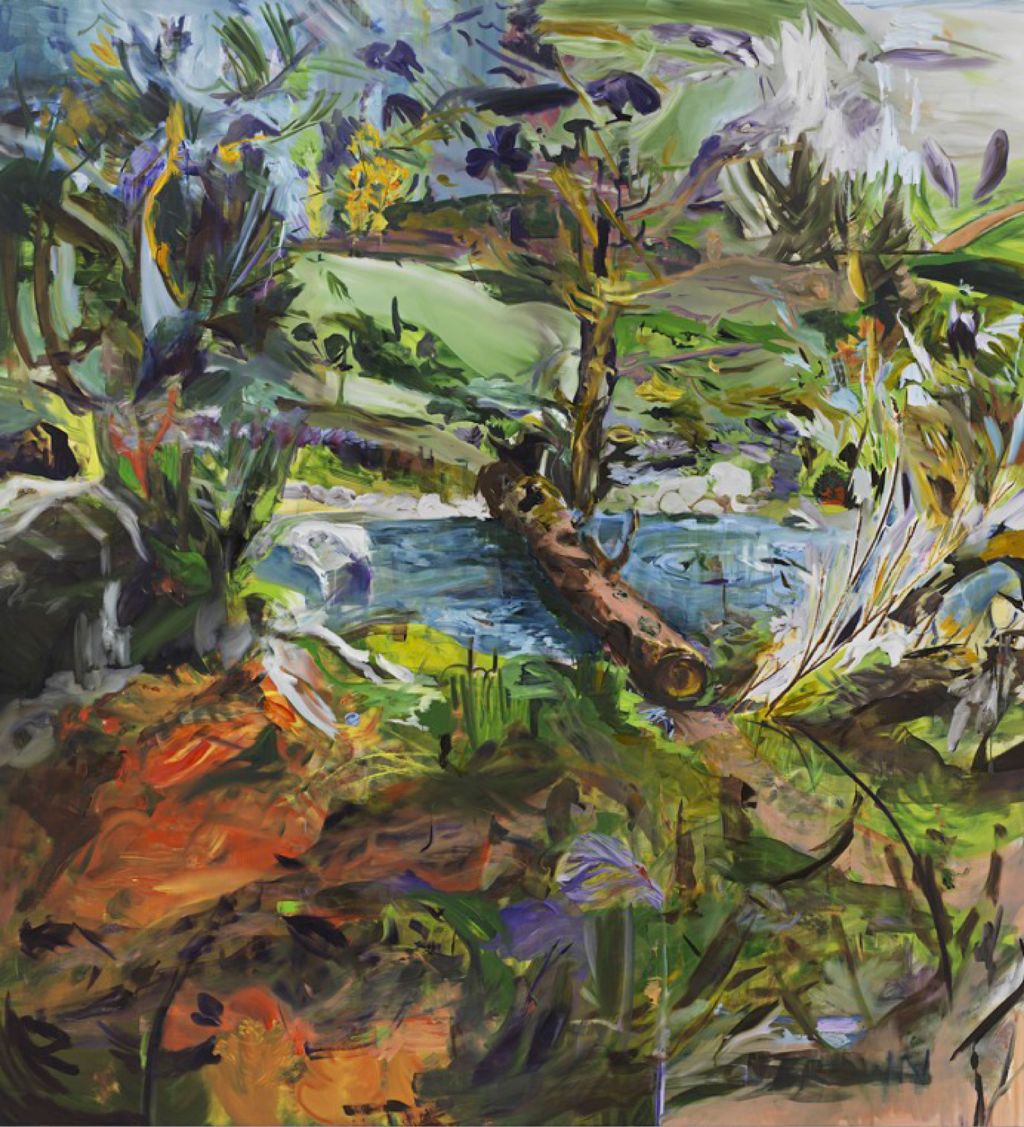 Courtesy the artist and Serpentine Galleries3/44
Cecily Brown: Picture Making at Serpentine South
British-born but New York-based, Cecily Brown’s paintings blur the lines between abstract and figuration and marry gestural brushwork with brilliant colour. Serpentine South Gallery, W2, is hosting her first significant institutional exhibition in this country in 20 years, with a new series inspired by the surrounding Kensington Gardens as well as significant works from earlier in her career. Don’t leave the park immediately – for there are two Serpentine Galleries.
Until September 6; serpentinegalleries.org
Pictured: Cecily Brown, Nature Walk with Paranoia, 2024,
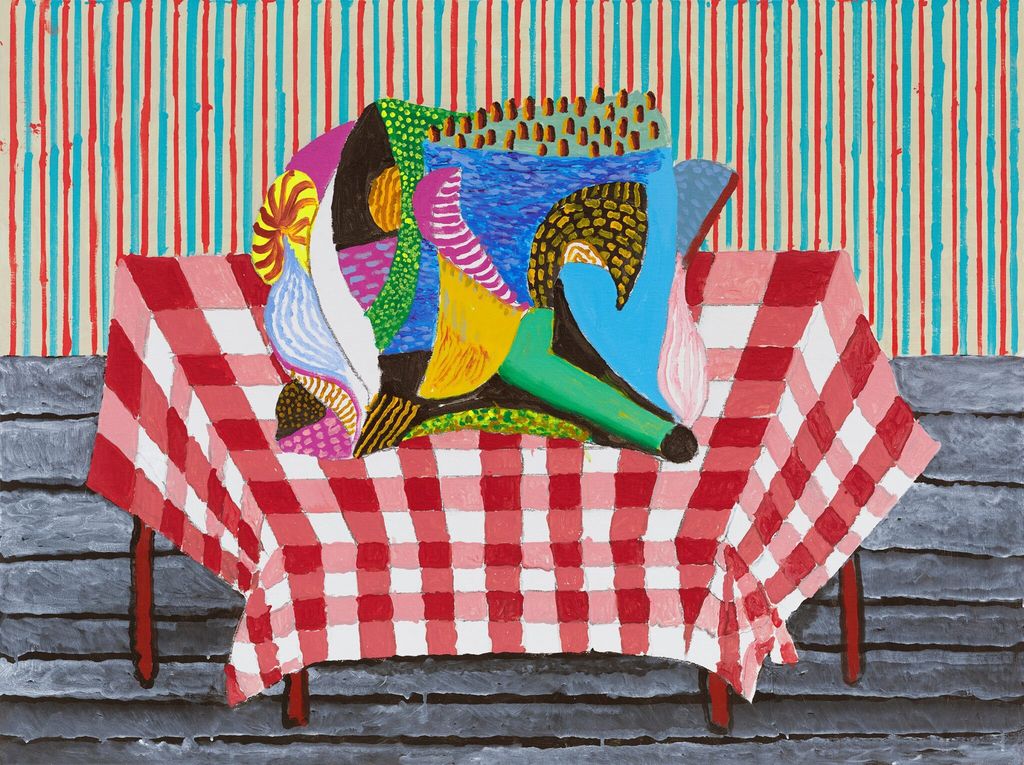 © David Hockney. Photo: Prudence Cuming4/44
David Hockney at the Serpentine North Gallery
David Hockney’s first exhibition for the Serpentine Galleries in Kensington Gardens, W2, brings to London his celebrated Bayeux Tapestry-inspired, 90-metre-long frieze, A Year in Normandy, which captures the changing seasons in his former studio. There are also new works created especially for this show. Together, they are an invitation to notice the extraordinary in our every day, and in the park outside.
Until August 23; serpentinegalleries.org
Pictured: David Hockney, Abstraction Resting on a Red and White Checkered Tablecloth, 2025
%2520Hurvin%2520Anderson.%2520Courtesy%2520the%2520artist%2520and%2520Thomas%2520Dane%2520Gallery.%2520Photo%2520Richard%2520Ivey.%2520copy.jpg)


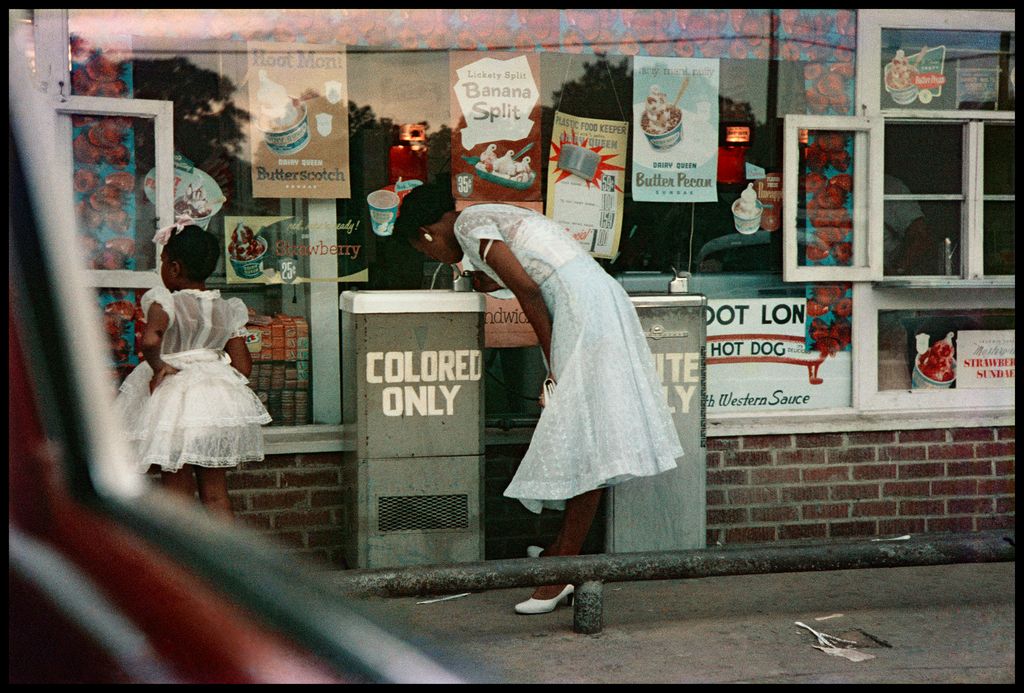 Courtesy The Gordon Parks Foundation, New York and Alison Jacques © The Gordon Parks Foundation5/44
Gordon Parks: We Shall Not Be Moved at Alison Jacques
Curated by prominent social justice activist, attorney and law professor Bryan Stevenson, this show at Alison Jacques, W1, is in partnership with The Gordon Parks Foundation, and presents some of the groundbreaking artist’s most seminal work. The first black photographer at Life magazine, Gordon Parks captured pivotal moments in American history, while his Segregation in the South series shows the human impact of the Jim Crow laws. The exhibition title references the protest anthem of the same name.
Until April 11; alisonjacques.com
Pictured: Gordon Parks, At Segregated Drinking Fountain, Mobile, Alabama, 1956
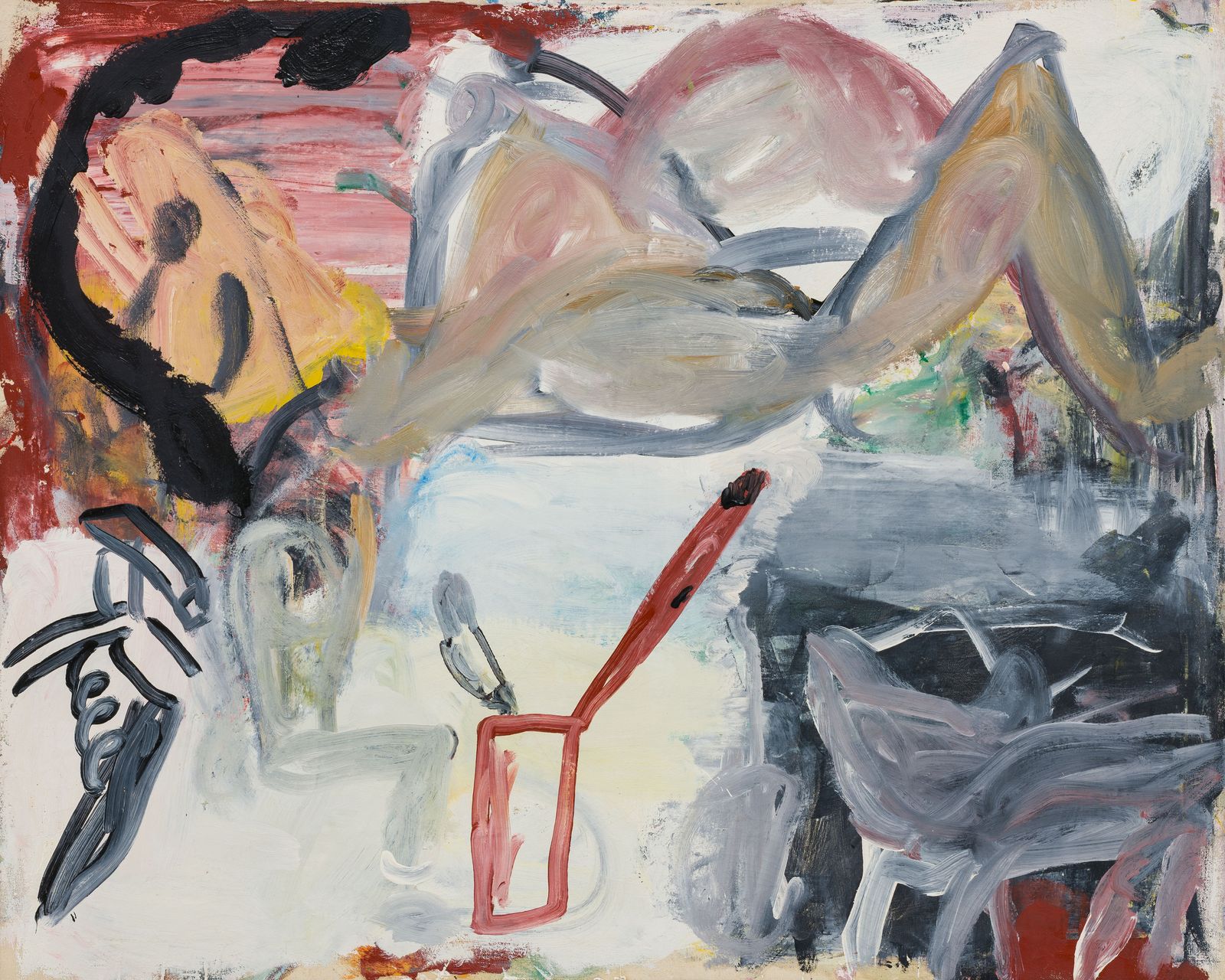
- Courtesy private collection and JARILAGER Gallery. Photograph courtesy Jari Lager. Photo: Soon-Hak Kwon. © Rose Wylie6/44
Rose Wylie: The Picture Comes First at the Royal Academy
There’s a naïve and exuberant joy to Rose Wylie’s best paintings, which comes coupled with an unapologetic painterly decisiveness in how she picks through sources that include her memories of childhood, literature, ancient civilisations, surprisingly violent cinema, her cat, the odd cake, and her garden. Now 92, Rose is the first female painter ever to be given a show in the Royal Academy’s grand, first floor rooms, and as well as offering a career survey, there are brand new works, all made in her wonderfully idiosyncratic home studio in Kent, which House & Garden visited a year or so ago. Devotees of her practice will be pleased to know that she’s speaking at this year’s Charleston Festival, taking place in East Sussex in May – booking is open now.
Until April 19; royalacademy.org.uk
Pictured: Rose Wylie, Pink Skater (Will I Win, Will I Win), 2015
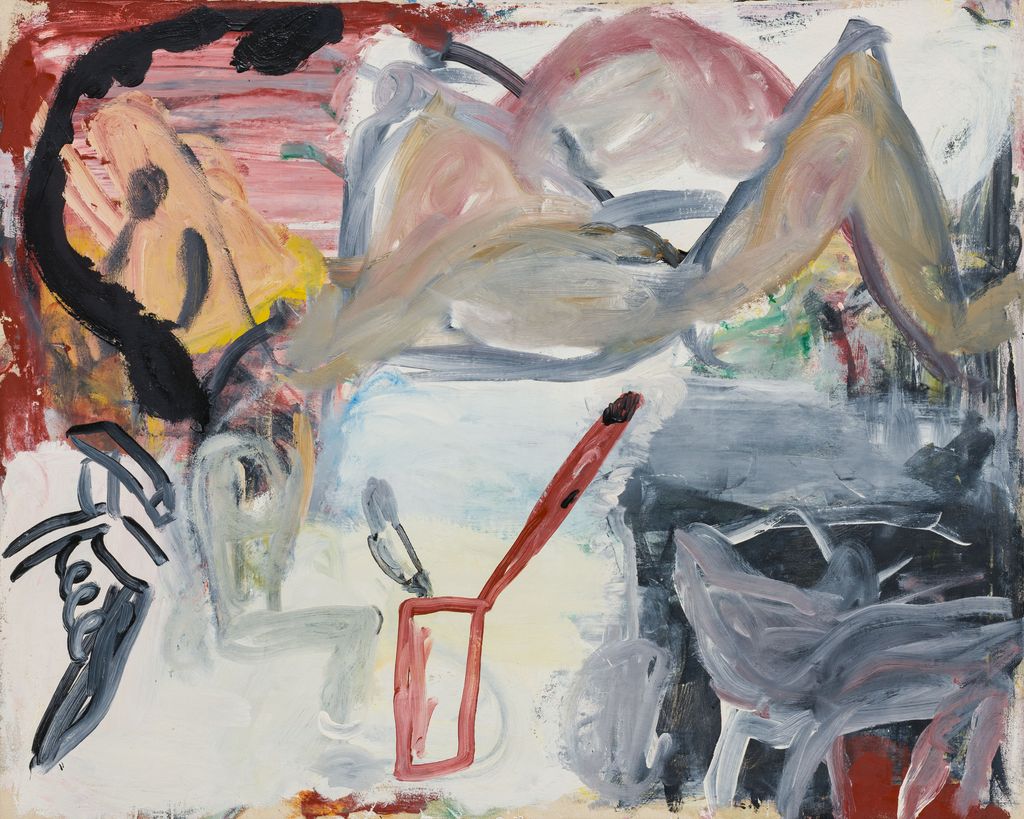 Michal Brzezinski @Lelenthal7/44
Roy Oxlade at Alison Jacques
Roy Oxlade, who was taught by David Bomberg, emerged in the 1950s alongside other School of London artists including Frank Auerbach and Leon Kossoff – and was Rose Wylie’s husband; the studio that she paints in was once his. Their work shares a directness, a joyfulness, and an interest in capturing domesticity, ritual and daily life – and thanks to Alison Jacques, W1, we’re being given an opportunity to compare their output almost side by side (Rose’s show at RA will have closed by the time this opens, but if you can retain her vast paintings in your mind’s eye…) This exhibition spans 30 years of his practice – and coincides with the publication of the first monograph on the artist.
April 23-May 30; alisonjacques.com
Pictured: Roy Oxlade, Rose and Cat, 1996
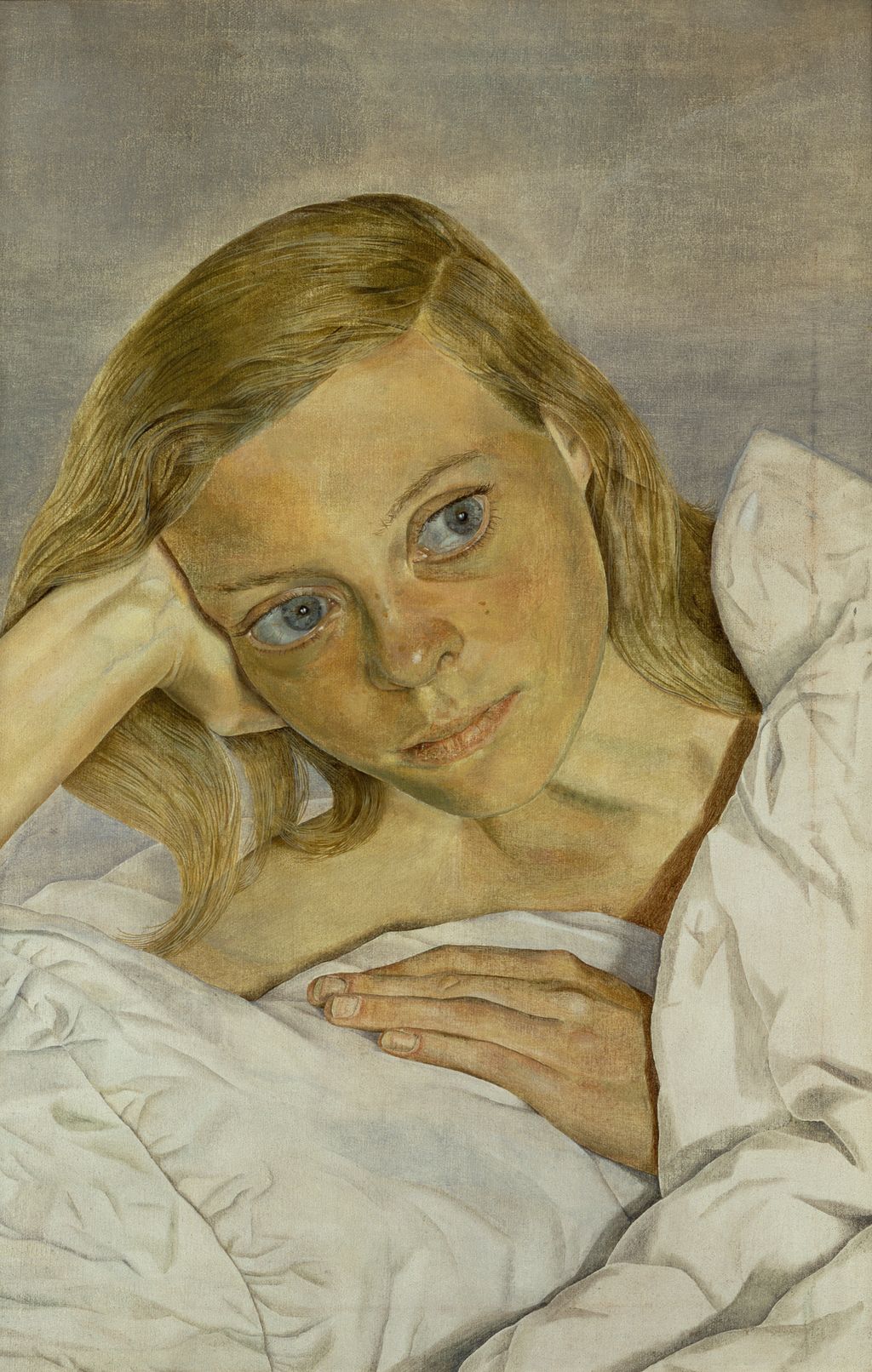 © The Lucian Freud Archive. All Rights Reserved 2026/Bridgeman Images. Photo © National Portrait Gallery, London. Lent by a private collection, courtesy of Ordovas.8/44
Lucian Freud: Drawing into Painting at the National Portrait Gallery
The School of London artist Lucian Freud was unquestionably one of the greatest artists of the twentieth century. Now, an exhibition at the National Portrait Gallery, co-curated by his former assistant David Dawson who now works from Lucian’s former studio, gives us opportunity to closely examine his works on paper, some of which have never been shown before, and discover the dialogue between them and his paintings. There are works he made as a child, exquisite portraits of friends, children, wives, and lovers – and an intensely observed painting of some daffodils and celery which, beauty aside, feels gloriously like a portent of spring. There’s a talk taking place later this month, between David Dawson and Tracey Emin, that discusses his continuing influence on contemporary art.
Until May 4; npg.org.uk
Pictured: Lucian Freud, Girl in Bed, 1952

%2C%25202015%2520Oil%2520on%2520canvas%2C%2520208%2520%25C3%2597%2520329%2520cm%2520Courtesy%2520private%2520collection%2520and%2520JARILAGER%2520Gallery%2520Photograph%2520courtesy%2520Jari%2520Lager.%2520Photo-%2520Soon-Hak%2520Kwon%2520%25C2%25A9%2520Rose%2520Wylie.jpg)


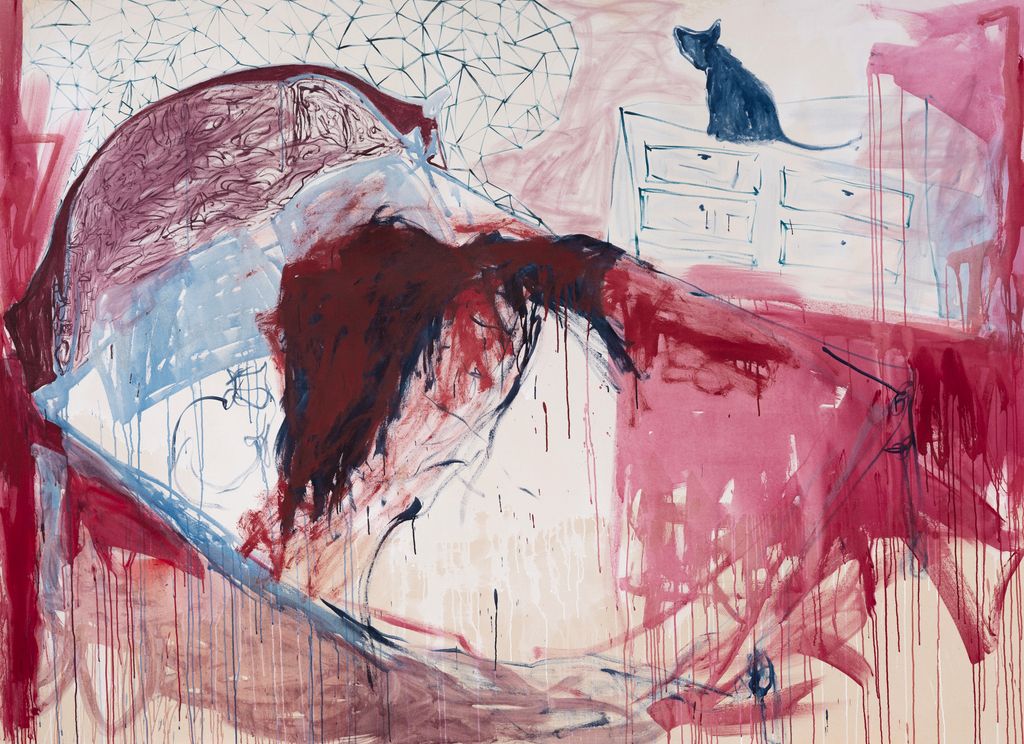 © Tracey Emin. Courtesy of Tate9/44
Tracey Emin: A Second Life at Tate Modern
Few artists have captured public imagination as wholly as Tracey Emin. In making porous the separation between public and private, and laying bear trauma, passion, and pain, she has altered our understanding of what art can be. The nomination of My Bed for the 1999 Turner Prize was a defining moment in contemporary art history. Now, Tate Modern is holding the largest ever survey of her practice. Conceived in close collaboration with her, it gathers forty years of installations, sculptures and paintings, the most recent of which contain within them a promise of transcendence. And devotees might like to know about the publication of a new book, My Heart is This: Tracey Emin on Painting by Martin Gayford and Tracey Emin, which presents a vividly intimate portrait that looks at why she paints.
Until August 31; tate.org.uk
Pictured: Tracey Emin, The End of Love, 2024
- © 2026 Stephen Flavin/Artists Rights Society (ARS), New York, Courtesy David Zwirner. Photo: Stephen Arnold10/44
Flavin, Judd, McCracken, Ryman, Sandback at David Zwirner
This thrilling exhibition at David Zwirner, W1, presents work by a group of pioneering artists who were at the vanguard of American art during the 1960s and 1970s. A selection of sculptures, paintings and prints demonstrate their radical reconfiguring of the possibilities of abstraction, and the use of colour as a non-representational form of expression. These are artists who established minimal, post-minimal, abstract and conceptual vocabularies that continue to resonate across the art world today.
Until May 22; davidzwirner.com
Pictured: Dan Flavin, three fluorescent tubes, 1963
- © Liza Lou. Courtesy Thaddaeus Ropac gallery (London, Paris, Salzburg, Milan, Seoul). Photo: Joshua White11/44
Liza Lou: FAQ at Thaddaeus Ropac
Proving that point about the continuing relevance of the minimalist language is American artist Liza Lou, who, earlier this century, produced a series of monochromatic bead-woven canvases. Now, a new body of work, being shown at Thaddaeus Ropac, W1, combines beads with oil paints, layering two distinctly different mediums to explore the push and pull between ‘absolute control and total abandon’, and ask fundamental questions about the nature of art.
April 10-May 23; ropac.net
Pictured: Liza Lou, Stanza, 2025
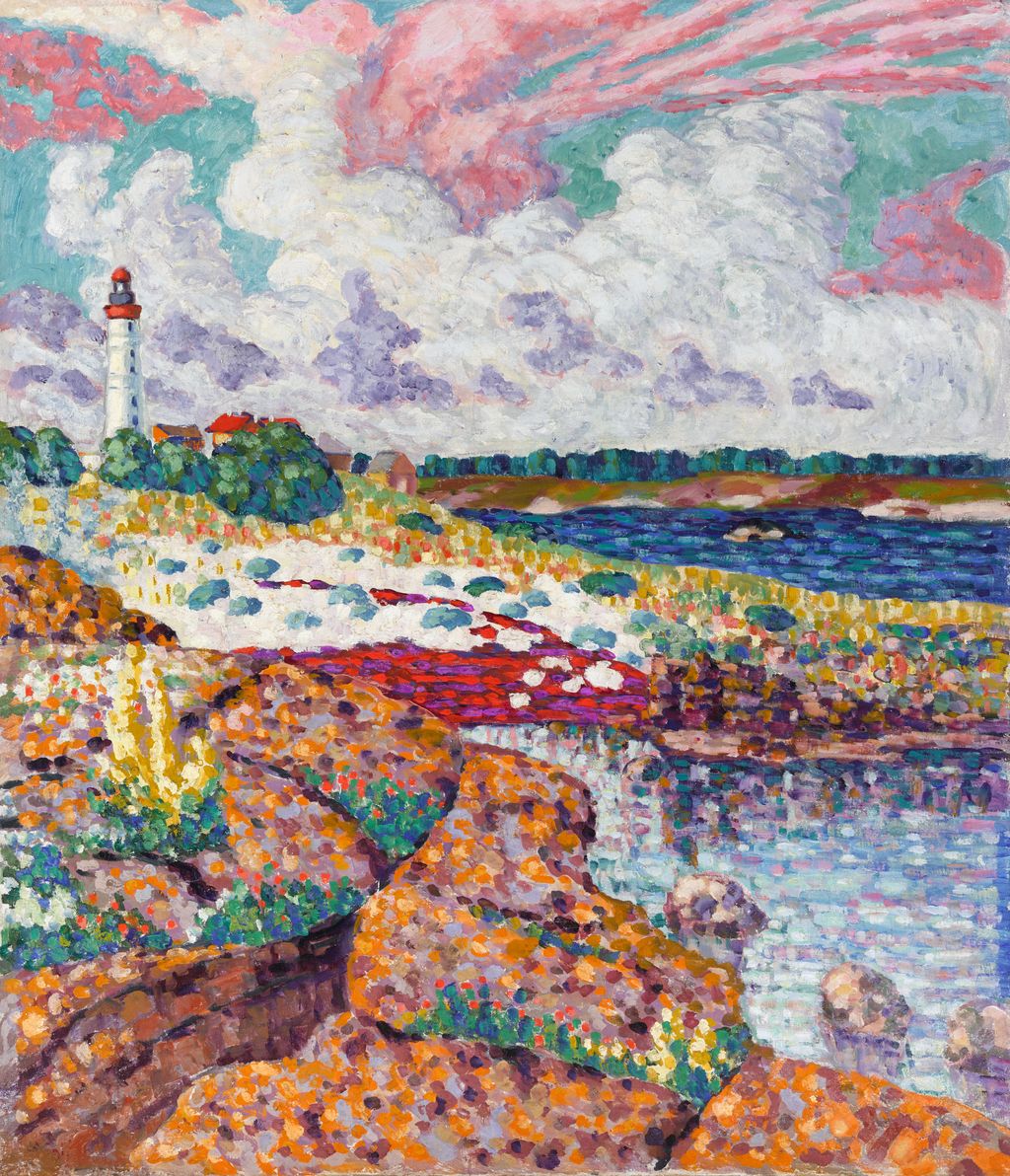 Courtesy of the Art Museum of Estonia12/44
Konrad Mägi at Dulwich Picture Gallery
Modernism was an international movement – a global response to industrialisation, urbanisation and rapid social change. While there were certain key centres, including Paris, London and Berlin, a recent run of institutional shows has offered us insight into parallel advancements beyond those cities (Nigerian Modernism is at Tate Modern until May 10).
Now, a new exhibition at Dulwich Picture Gallery, SE21, focuses on the great Estonian artist Konrad Mägi (1878-1925) with over 60 of his works, many of which have never been seen outside that country. Mägi studied in St. Petersburg, travelled extensively through Norway, Finland, and western Europe, and his pioneering use of colour and avant garde style grew from the influences of Neo-Impressionism, Cubism and Expressionism, which he combined with his own ideas and developments. He initially found fame with enigmatic landscapes that demonstrate a fascination with nature and, later, with the mystical and sublime. But this exhibition also brings to the fore his striking portraits, mostly commissioned by wealthy Estonian families and distinctive for their psychological depth.
Until July 12; dulwichpicturegallery.org.uk
Pictured: Konrad Mägi, Vilsandi Motif, 1913-14

%2C%2520New%2520York%2520Courtesy%2520David%2520Zwirner%2520Photo%2520by%2520Stephen%2520Arnold.jpg)


- © Photo: Syd Shelton13/44
The Music is Black: A British Story at V&A East
The inaugural exhibition at the brand-new V&A East, E20, is a multisensory celebration of the profound and lasting influence of Black artistry on British music and culture. Spanning over 125 years, it brings together sound and multimedia installations with objects that span fashion, photography, art, song sheets, musical instruments and more, promising a high-octane experience.
April 18-January 3, 2027; vam.ac.uk
Pictured: Syd Shelton, Against Racism during The Specials’ set, Potternewton Park, Leeds, 1981, printed 2012
- © Estate of Paula Rego, Courtesy Estate of Paula Rego and Victoria Miro. Photo: Jack Hems14/44
Paula Rego: Story Line at Victoria Miro
Paula Rego is widely considered one of the greatest women artists of the late 20th and early 21st century – and Victoria Miro, N1, is holding the most comprehensive exhibition to date of her drawings. Featuring work from the 1950s until her death in 2022, it gives us opportunity to explore her evolving use of line in media that ranges from pen and ink to pastel, conté, charcoal and pencil – and how it was driven by her particular approach to storytelling. Accompanying the show is a new publication, with writing by the artist’s son, Nick Willing.
April 17-May 23; victoria-miro.com
Pictured: Paula Rego, Study for the Artist in her Studio, 1993
 Courtesy the artist and Josh Lilley, London15/44
Nick Goss: Eel Pie Hotel at Josh Lilley
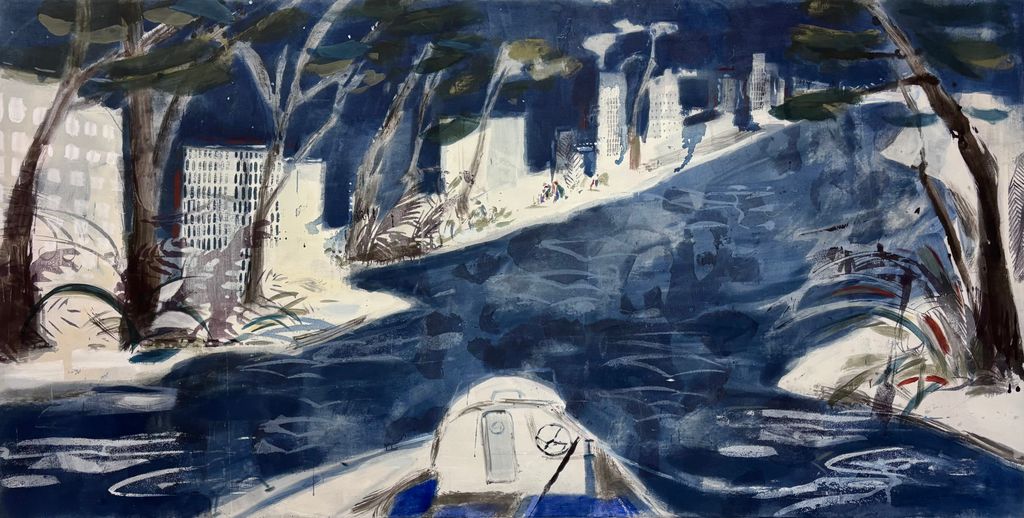
This exhibition at Josh Lilley, W1, presents a new body of work by Nick Goss, inspired by the legendary Eel Pie Island Hotel, a renowned music venue located on an island in the Thames at Twickenham. The Rolling Stones did a five-month residency there in 1963, and other performers included David Bowie, Eric Clapton, and Pink Floyd. Accounts tell of a thrilling lawlessness - before it lost its licence and then, in the 1970s, was destroyed by a fire. A mythology has grown up around it, and Nick’s paintings refer to overlapping memories, and the instability of a narrative, while taking the viewer on a journey along the river. The figures are drawn from archival photographs and stills from Fellini’s 1980s films, and the hotel itself appears only in glimpses, through foliage, crowds, and emptied interiors.
April 23-May 27; joshlilleygallery.com
Pictured: Nick Goss, A Bend in the River, 2026
 16/44
16/44Giles Round: Bulverhythe 76 at Mackintosh Lane
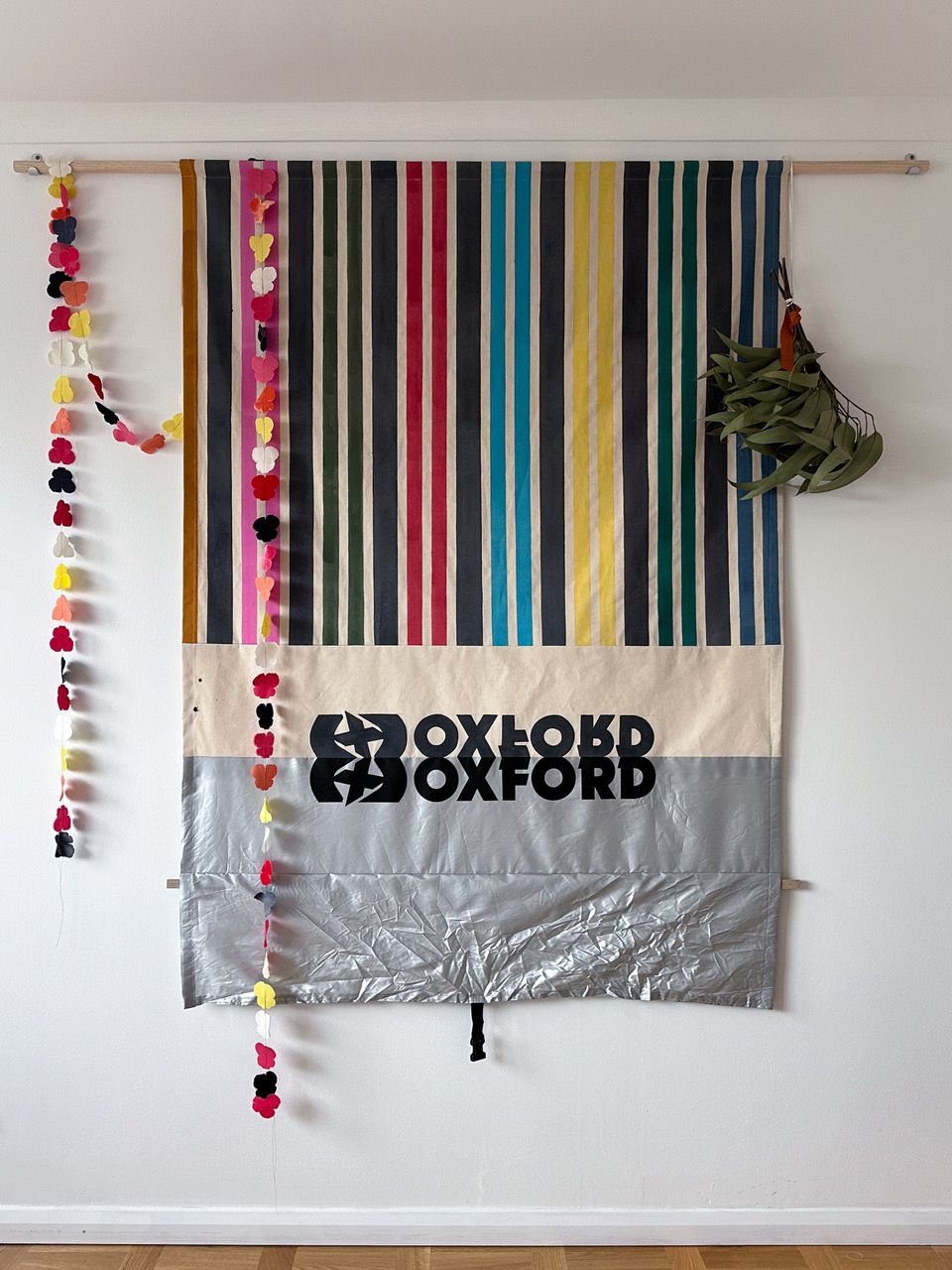
Giles Round’s practice sees him merging his own biographical details with those of artists he admires, to consistently compelling effect. This show at Mackintosh Lane, E9, presents a new body of work, made in the five years since he moved to the East Sussex coast, which developed from research into how a shift in location has impacted others. The exhibition title simultaneously refers to his new location, his year of birth, and Robert Rauschenberg’s Jammers – a series of sewn works hung directly on the wall using everyday objects. Similarly, Giles’s paintings, that take from the coastal vernacular such as deck chair stripes, are hung from ash poles - and incorporate logos and objects found wandering the coastal path, while an ‘artist text’ incorporates paraphrased elements from a Jaspar Johns interview.
April 11-12; mackintoshlane.com
Pictured: Giles Round, Sunsets & Sailboats: Low Tide (for Jarman), 2026


- National Gallery of Art, Washington DC17/44
Seurat and the Sea at The Courtauld
Georges Seurat radicalised painting with his ideas about colour theory and his pointillist technique of applying pure colour to the canvas - and, in doing so, unknowingly led the way to abstraction. This exhibition at the Courtauld, WC1, charts the evolution of his style through his breathtaking seascapes. For more, and to see the pointillist work of those he inspired, do head to the National Gallery (he and his followers were also known as the Neo-Impressionists.)
Until May 17; courtauld.ac.uk
Pictured: Georges Seurat, Seascape at Port-en-Bessin, Normandy, 1888
 18/44
18/44Marthe Armitage: Pattern Maker at Pitzhanger Manor
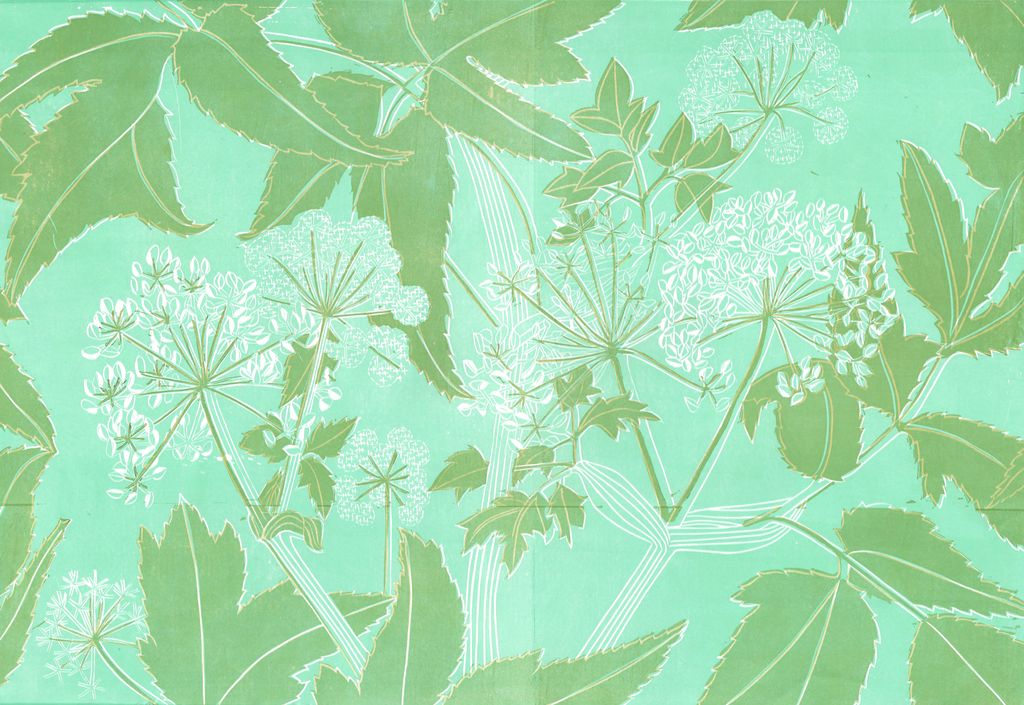
Now in her mid-90s, Marthe Armitage is renowned for her distinctive approach to pattern making – which we’ve explored in more detail in the upcoming June issue of this magazine. An exhibition at Pitzhanger Manor, W5, traces her process and looks at some of her paintings – for Marthe trained at Chelsea School of Art in the 1940s, and later took lessons from Maggi Hambling – as well as her glorious wallpapers and fabrics.
Until July 19; pitzhanger.org.uk
Pictured: ‘Angelica’ by Marthe Armitage
%2520%25e8%25a5%25bf%25e7%2593%259c%2520(1772)%2c%2520oak%2520spring%2520garden%2520foundation%2c%2520upperville%2c%2520va%2520copy.jpg) Oak Spring Garden Foundation, Upperville, VA19/44
Oak Spring Garden Foundation, Upperville, VA19/44Seeds of Exchange: Canton and London in the 1770s at the Garden Museum
Centring around an important collection of botanical art and research, commissioned by botanist John Bradby Blake (who worked in China for the British East India Company) this fascinating exhibition at the Garden Museum, SE1, explores the exchange in botanical knowledge between Canton and London in the 1700s. It’s the first time the collection – which contains exquisite botanical illustrations - has ever been on display in London.
Until May 31; gardenmuseum.org.uk
Pictured: Citrullus lanatus (watermelon) 西瓜, 1772
 © 2025 Salvador Dalí, Fundació Gala-Salvador Dalí, DACS. Photo: Philadelphia Museum of Art, Gift of Mme E20/44
Schiaparelli: Fashion Becomes Art at the V&A
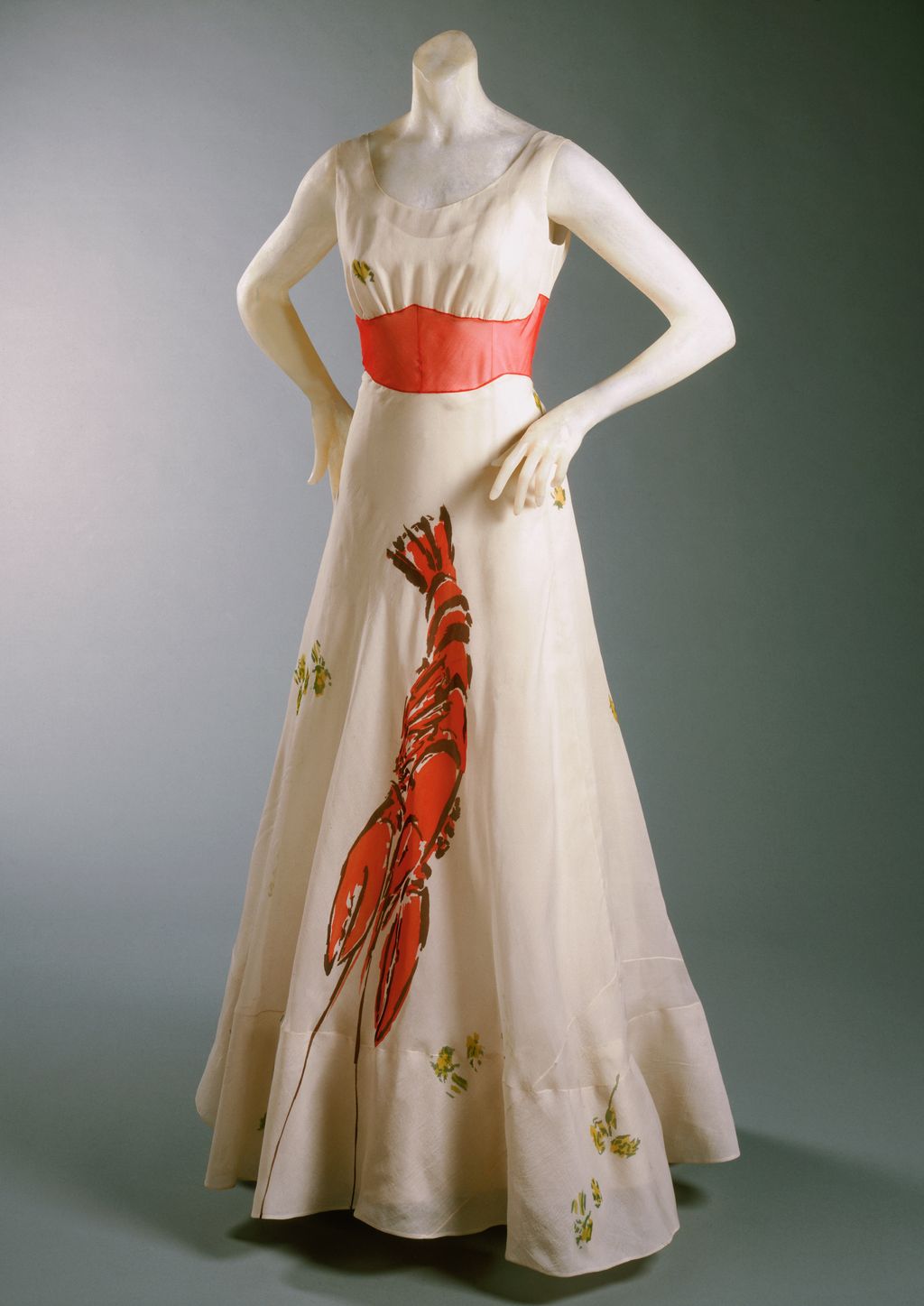
The V&A South Kensington is holding the first ever exhibition devoted to the house of Schiaparelli, tracing the wide-reaching impact of the legendary Elsa Schiaparelli, who was closely associated with the Surrealists, from the 1920s to today. Within the galleries is a wealth of dresses – some conceived in collaboration with Salvador Dali – accessories, jewellery, sculpture, archive photography - and furniture. For, with the help of the great French decorator Jean-Michel Frank, and Alberto Giacometti, Schiaparelli bought the same exacting eye to interiors as she did to her clothes.
Until November 8; vam.ac.uk
Pictured: Lobster Dress by Elsa Schiaparelli, designed in collaboration with Salvador Dalí, Paris, summer 1937


%2520%25E8%25A5%25BF%25E7%2593%259C%2520(1772)%2C%2520Oak%2520Spring%2520Garden%2520Foundation%2C%2520Upperville%2C%2520VA%2520copy.jpg)

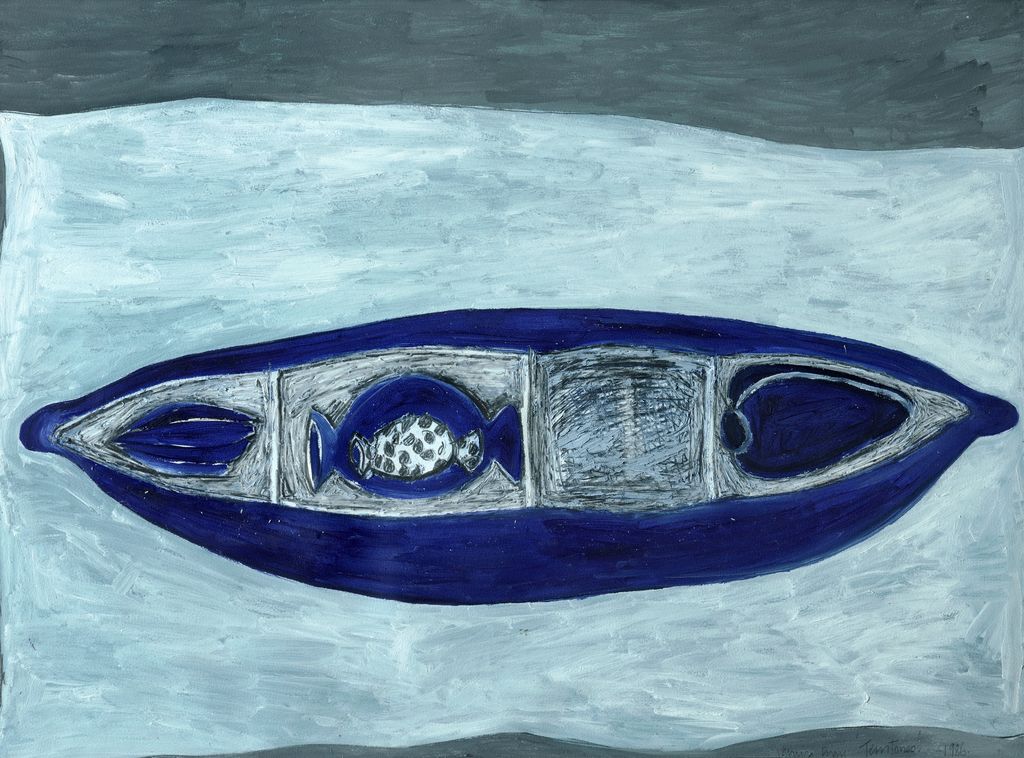 Courtesy the artist and Whitechapel Gallery21/44
Veronica Ryan: Multiple Conversations
In 2022, Veronica Ryan was awarded the Turner Prize for her lyrical sculptures of Caribbean fruits, but her four-decade practice has also incorporated textiles and vivid works on paper. The Whitechapel Gallery, E1, is hosting a comprehensive survey that enables us to trace her enduring artistic interests, and presents new pieces, specially conceived for this show.
Until June 14; whitechapelgallery.org
Pictured: Veronica Ryan, Territories, 1986
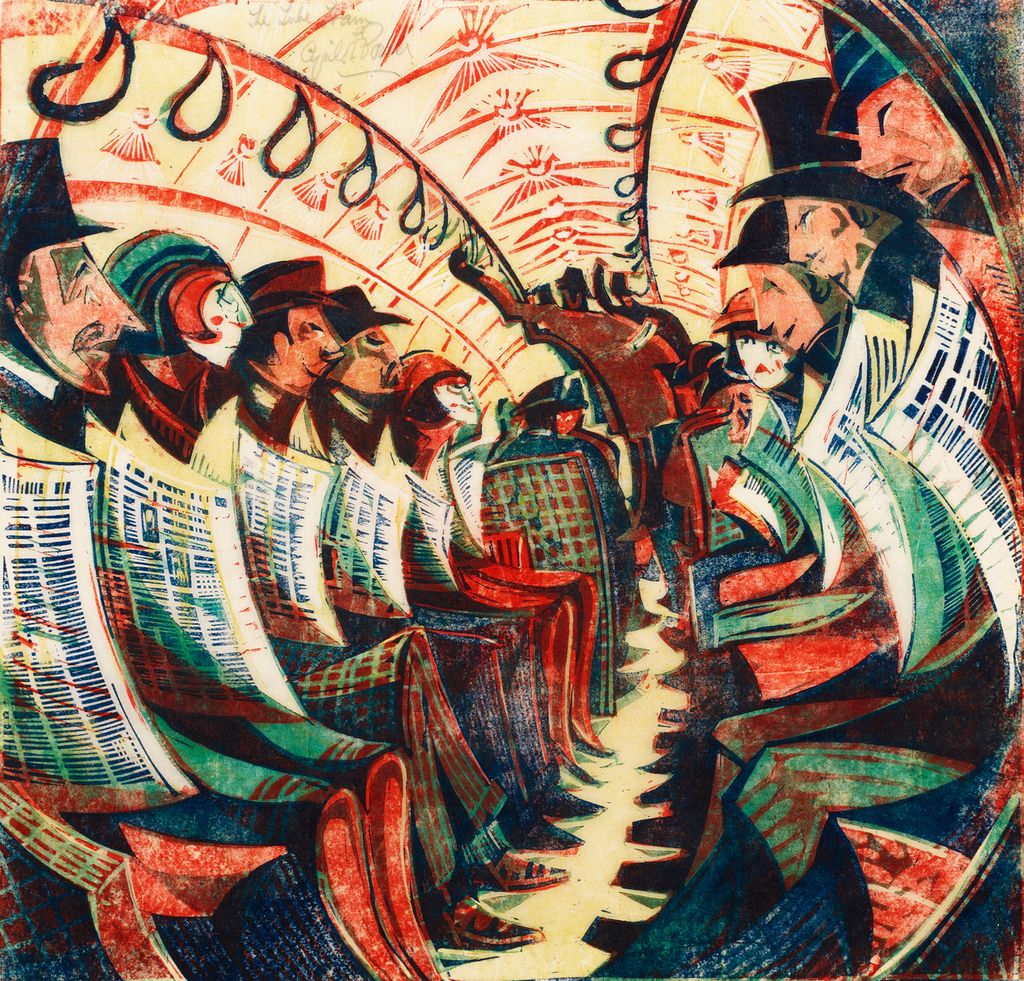 Courtesy of Lyndsey Ingram22/44
London in Motion at Lyndsey Ingram
This show at Lyndsey Ingram, W1, centres on the pioneering interwar linocuts of Cyril Power and other leading figures of the Grosvenor School, including Claude Flight and Sybil Andrews. Presented in collaboration with Thomas Gibson Fine Art, the collected works highlight the artists’ engagement with the dynamic sights, rhythms and vitality of a rapidly modernising city at a crucial moment in our history – here are crowds of commuters, sporting spectacles and London’s expanding infrastructure such as the Underground, innovatively transformed into highly compelling prints.
Until April 17; lyndseyingram.com
Pictured: Cyril Power, The Tube Train, c1934
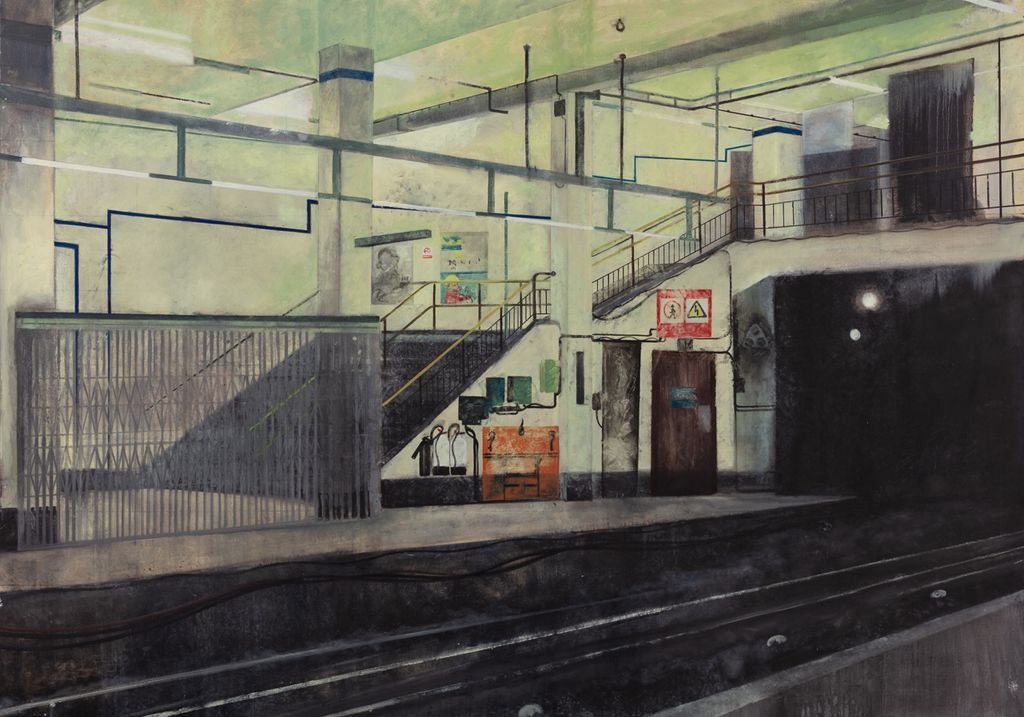 Photo: Peter Abrahams. Lucid Plane, art documentation photography23/44
Jock McFadyen and Jem Finer: Underground (and Surface) at the Guildhall Art Gallery
There’s more of London’s subterranean transport system at the Guildhall Art Gallery, EC2, where Jock McFadyen and Jem Finer’s (of The Pogues) collaborative installation Underground is being restaged. It features large canvases from Jock’s eponymous series, begun in the late 1990s and ongoing, exhibited with an accompanying soundscape by Jem Finer. Jock and Jem met in the early 1980s when Jock was artist in resident at the National Gallery, and The Pogues were performing in squat gigs around the city. Jem’s contribution was inspired by Jock’s eulogising of the cacophony afforded by the tube ride between Bethnal Green and Liverpool Street. There is a lyrical poeticism to the whole – for these artists have found beauty in the brutal.
Until September 20; cityoflondon.gov.uk
Pictured: Jock McFadyen, Aldgate East, 1997
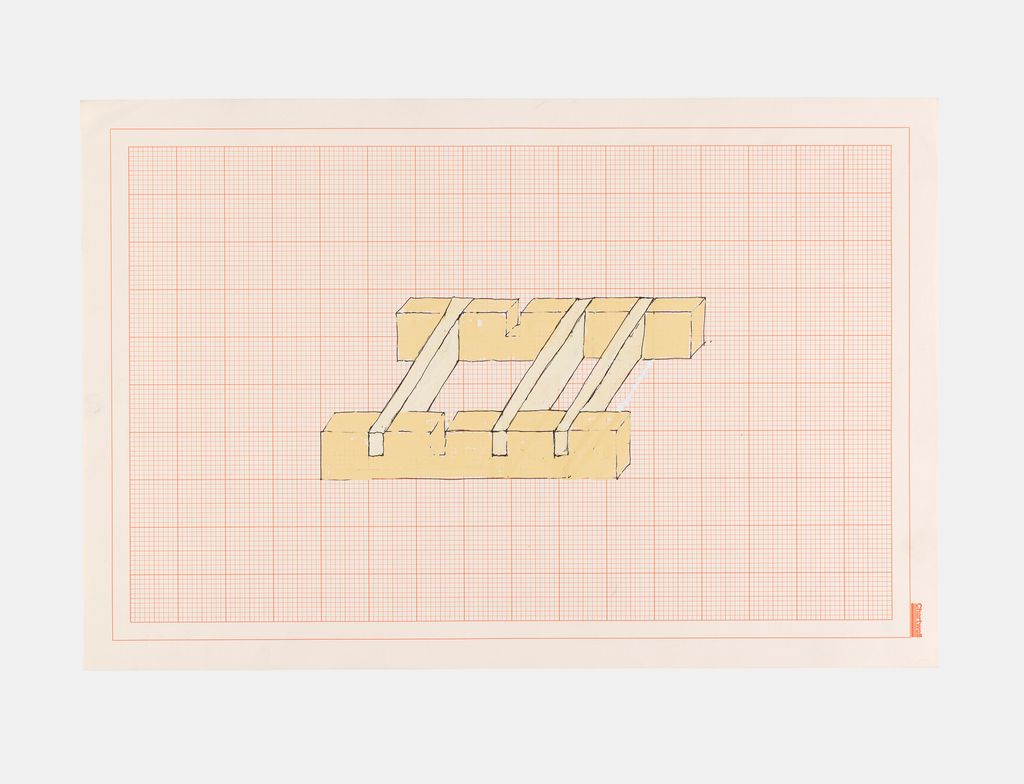 Courtesy the artist and Hazlitt Holland-Hibbert24/44
Rachel Whiteread: Drawings, with Related Sculpture at Hazlitt Holland Hibbert
For decades, there has been a label on the back of Rachel Whiteread’s framed drawings reading ‘It is Rachel Whiteread’s express wish that none of her drawings should be exhibited alongside her sculptures.’ Now, in a rare departure, Hazlitt Holland-Hibbert, SW1, in a show curated in close collaboration with Rachel, is doing just that – and so affording the viewer a new understanding of the practice of the artist who, in 1993, won the Turner Prize for her concrete cast of the interior of a Victorian terraced home in East London, and who famously sees beauty and interest in things that other people disregard.
Until April 18; hh-h.com
Pictured: Rachel Whiteread, Floor, 1992


- © Sean Scully, Courtesy Lisson Gallery25/44
Sean Scully: The Nature of Art at Lisson Gallery
Sean Scully – arguably the greatest among today’s abstract painters – has always held landscape as a touchstone. This exhibition at Lisson Gallery, NW1, presents his 2005 series of photographs taken on the Isle of Arran, alongside two paintings and numerous drawings, watercolours, and written works that together chart the theme of nature within his work.
Until May 9; lissongallery.com
Pictured: Sean Scully, The Nature of Art 8.14.25, 2025
 1996-98 AccuSoft Inc., All rights reserved26/44
Vanbrugh: The Drama of Architecture at Sir John Soane Museum
Sir John Vanbrugh (1664-1726) was the original ‘starchictect’ – the ‘rockstar of the English Baroque.’ 300 years after his death, a new exhibition exploring his work is opening at Sir John Soane’s Museum, WC2. He designed some of Britain’s most admired country houses, including Blenheim Palace and Castle Howard – and had a remarkable ability to exploit the emotional impact of architecture via dramatic use of light and shadow, created with recessions and projections.
Until June 28; soane.org
Pictured: Soane office, Royal Academy Lecture Drawing of the work of Sir John Vanbrugh, Goose-Pie House, London: Whitehall, perspective
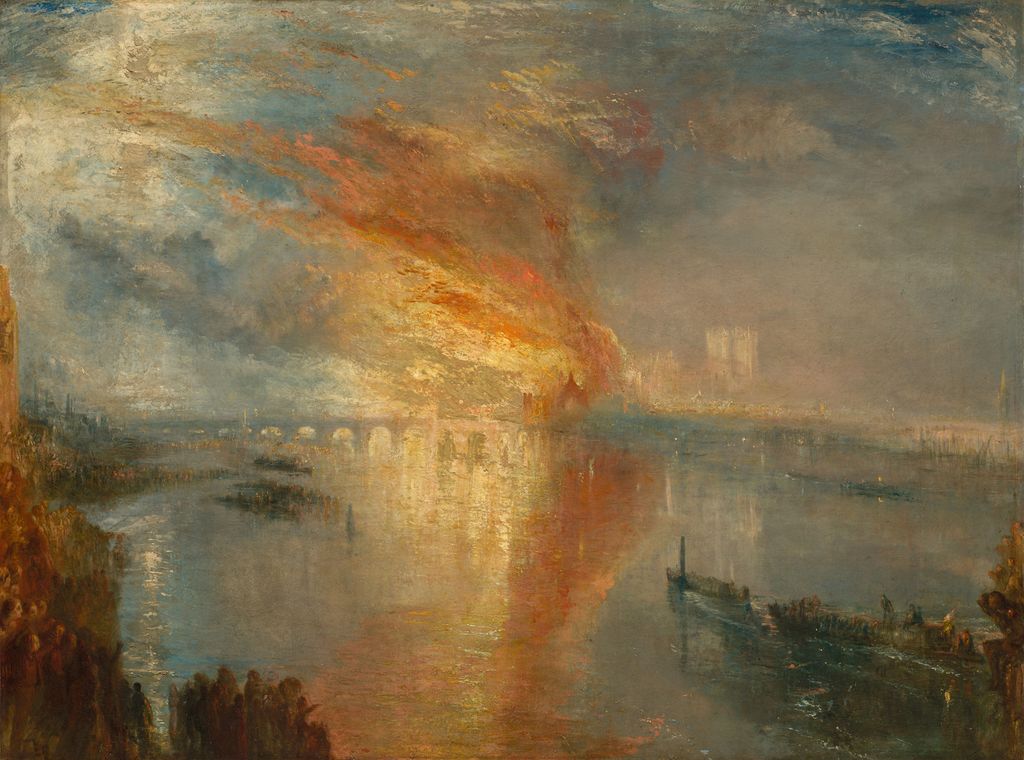 Cleveland Museum of Art. Photo: Howard Agriesti27/44
Turner and Constable: Rivals & Originals at Tate Britain
Born within a year of each other, 250 years ago, two of Britain’s greatest painters were also, in their lifetime, the greatest of rivals. Both used landscape to chart the changing world around them – though in completely different ways: one critic of the day compared it to ‘a clash between fire and water.’ This cleverly curated and wondrous exhibition at Tate Britain examines their approaches, lives and legacies, inviting us to examine their brush marks, compositions and cloud studies, and make our own decision as to who was the greater artist – if we can.
Until April 12; tate.org.uk
Pictured: JMW Turner, The Burning of the Houses of Lords and Commons 16 October 1834, 1835
- Archivio Alessandro Mendini28/44
Alessandro Mendini at the Estorick Collection
Alessandro Mendini was one of post-war Italy’s most creative and influential designers and architects, playing an important part in the development of Post-Modernist and Radical design. As well as having his own practice, he collaborated with brands including Cartier, Hermès, Alessi, Supreme and Louis Vuitton, and was Editor-in-Chief of Domus magazine. The Estorick Collection, N1, is bringing together 50 key works – from furniture to objets, paintings to rugs – that celebrate his witty and exuberant approach, and his irreverent engagement with art history: look out for sofa inspired by Kandinsky’s abstractions, and the Proust Armchair, a neo-Baroque iteration transformed by pointillist colour.
Until May 10; estorickcollection.com
Pictured: Alessandro Mendini, Neo Malevic, 2003


- Private collection © Beatriz González. Courtesy the artist. Photo: Juan Rodríguez Varón29/44
Beatriz González at the Barbican
Beatriz González grew up in Columbia in the 1940s and 50, a period of political unrest known as La Violenca, when the Catholic church was not just a religious institution, but a partisan force. Now, the Barbican, EC1, is presenting her largest ever show in Europe, a major retrospective that brings together six decades of highly influential work that speaks to conflict, communion, grief, power, and memory through paintings, sculptural assemblages, and monumental public installations.
Until May 10; barbican.org.uk
Pictured: Beatriz González, Asesinada Mujer En Hospedaje Positivo (Murdered Woman at Lodging), 1985
- © Reproduced by kind permission of the National Trust30/44
The Wallace Collection at War at the Wallace Collection
In 1939, Hertford House, home of the Wallace Collection, was evacuated of its world-renowned artworks, and the building was briefly repurposed. This fascinating display tells the tale of the alternative shows it hosted during those years. The focus is on two key exhibitions, mounted under the guise of cultural diplomacy. Artists Aid Russia and Twenty-Five Years of Progress, both held in 1942, championed the Soviet Union and Anglo-Soviet friendship at a defining point in the conflict. While Augustus John and Jacob Epstein took part in the first, the latter was designed by modernist architect Erno Goldfinger (of Trellick Tower fame) who transformed the galleries with dynamic banners, maps, and photomontages.
April 15-October 25; wallacecollection.org
Pictured: 25 Years of Progress, the first-floor landing dominated by a photograph of Joseph Stalin, flanked by Winston Churchill and Franklin D. Roosevelt
-copy.jpg) ©RBKC. Photo: Siobhan Doran31/44
©RBKC. Photo: Siobhan Doran31/44The Arab Hall: Past and Present at Leighton House
On one of Kensington’s back streets, hidden behind an unassuming red-brick façade, is one of the most beautiful rooms in Britain: Victorian artist Lord Frederic Leighton’s Arab Hall. A collaboration between Leighton, his architect George Aitchison, the ceramicist William de Morgan, and others, it was partly inspired by the 12th century La Zisa Palace in Sicily. The walls are encased in exceptional underglazed tiles from the Near East, the windows screened by mashrabiya (lattice), there is a shallow pool in the centre that James McNeil Whistler and Edward Burne-Jones once accidentally walked into mid-conversation, and the whole is crowned with a gilded dome. It was designed, said Leighton, ‘for the sake of looking at something beautiful every once in a while.’ Now, an exhibition at Leighton House, W8, traces the room’s origins and the key figures who contributed to its creation. Alongside are three interventions by contemporary artists, and a new film that explores the tiles.
Until October 4; rbkc.gov.uk
Pictured: The Arab Hall at Leighton House
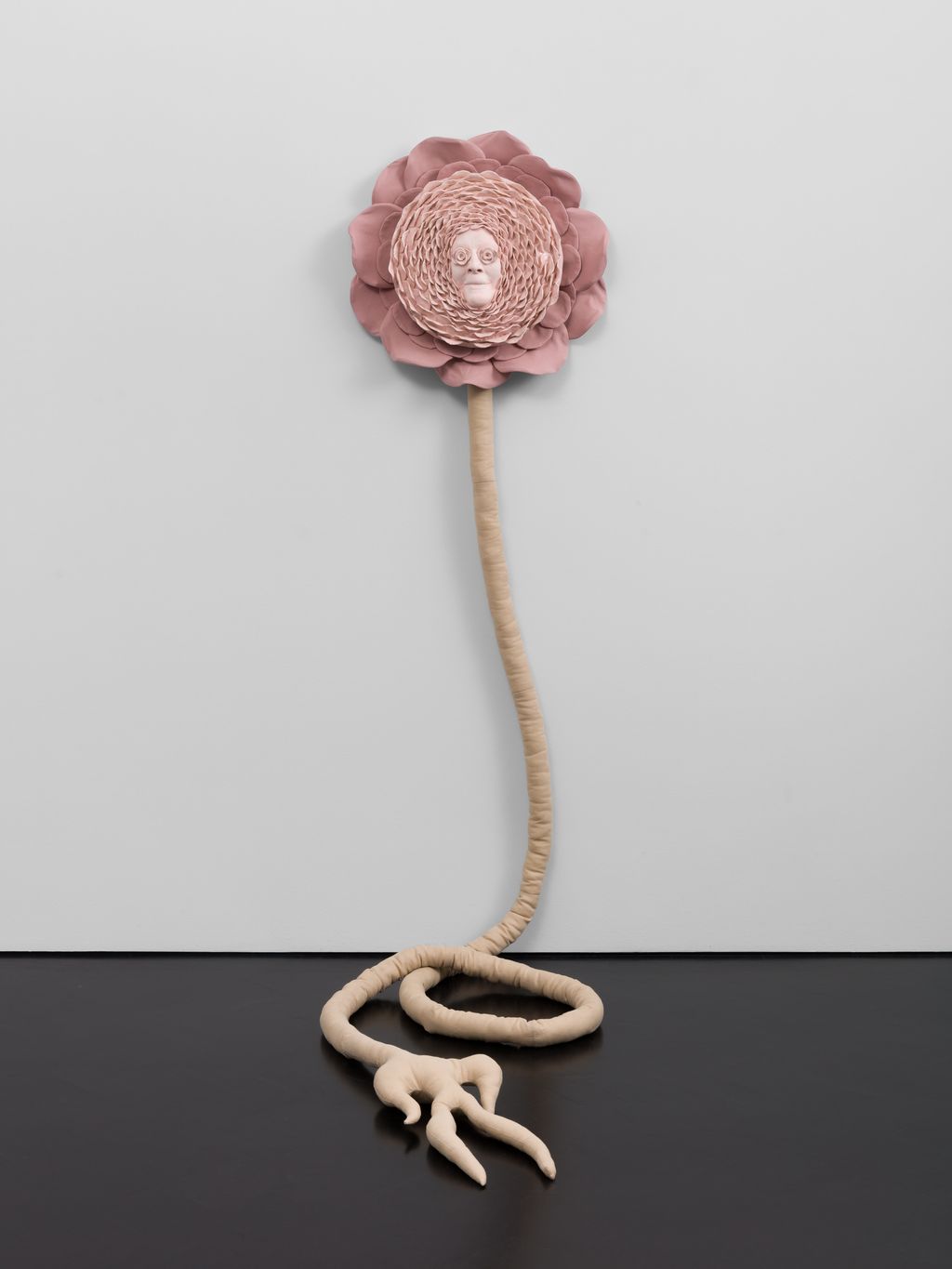 Courtesy the artist and Stephen Friedman Gallery. Photo: by Mark Blower32/44
Jonathan Baldock: The Gathering at the Gallery Restaurant, Sketch
Ever since the Gallery restaurant at Sketch opened in 2002, taking bookings for afternoon tea or dinner, its India Mahdavi design has been made even more distinctive by collaboration with artists who have numbered David Shrigley and Yinka Shonibare. Now it’s the turn of Jonathan Baldock, who is installing an array of playful works across the space that incorporate a range of materials from clay to textiles, and include masks, cocoons, and flowers that that morph into human shapes.
Pictured: Jonathan Baldock, Just a wild mountain rose, 2022
%2C%25201985.%2520Private%2520collection%2520%2520%2520%2520%25C2%25A9%2520Beatriz%2520Gonza%25CC%2581lez.%2520Courtesy%2520the%2520artist.%2520Photo%2520-%2520Juan%2520Rodri%25CC%2581guez%2520%2520Varo%25CC%2581n%2520copy.jpg)

-copy.jpg)

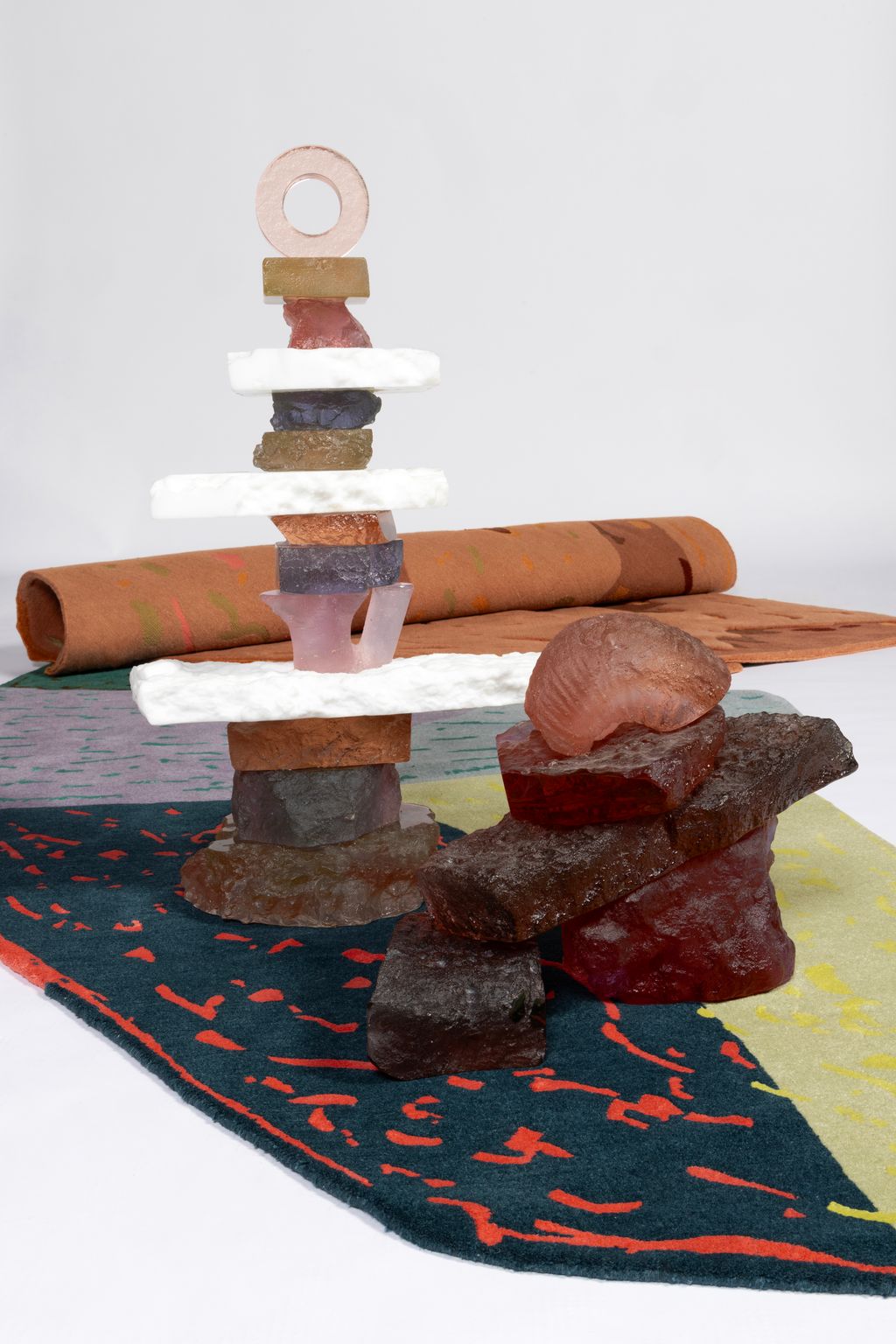 Graham Pearson33/44
The Ground of Things: Dawn Bendick in collaboration with FJ Hakimian at Charles Burnand Gallery
Charles Burnand Gallery, W1, is presenting a new body of work by American-born, Kent-based artist Dawn Bendick. Best known for her sculptural work in glass, this show also sees an expansion of her practice into textiles, and a collection of rugs developed in close collaboration with New York-based tapestry and carpet specialists FJ Hakimian.
April 7-May 17; charlesburnand.com
Pictured: Dawn Bendick x FJ Hakimian, Rock Stack Cloud (Shelf) 2 and Rubble Cherry Cola Boulder Rug (rolled up) and Rock Stack Rug (on floor)
 Courtesy of the artist34/44
New Contemporaries at the South London Gallery
For insight into the latest ideas and developments in contemporary art, the South London Gallery, SE5, is hosting the annual group show from New Contemporaries, the UK’s leading organisation supporting early career and emerging artists. 26 artists, selected through an open call, present responses to the climate crisis, gentrification, displacement, and our systems of power, as well as exploring our relationships and connections with each other, our ancestors, and technology.
Until April 12; southlondongallery.org
Pictured: Viviana Almas, Solus, 2025
%2c%2520%25201970%2520(1)%2520copy.jpg) 35/44
35/44Red at Ordovas
Ordovas, W1, is presenting an exhibition exploring one of the most symbolic colours in the history of art, and looking at how it’s been used by a number of significant artists of the 20th and 21st centuries, including Ellsworth Kelly, Robert Motherwell, Bridget Riley, and Cecily Brown.
Until April 24; ordovasart.com
Pictured: Robert Motherwell, Untitled (Open Red), 1970
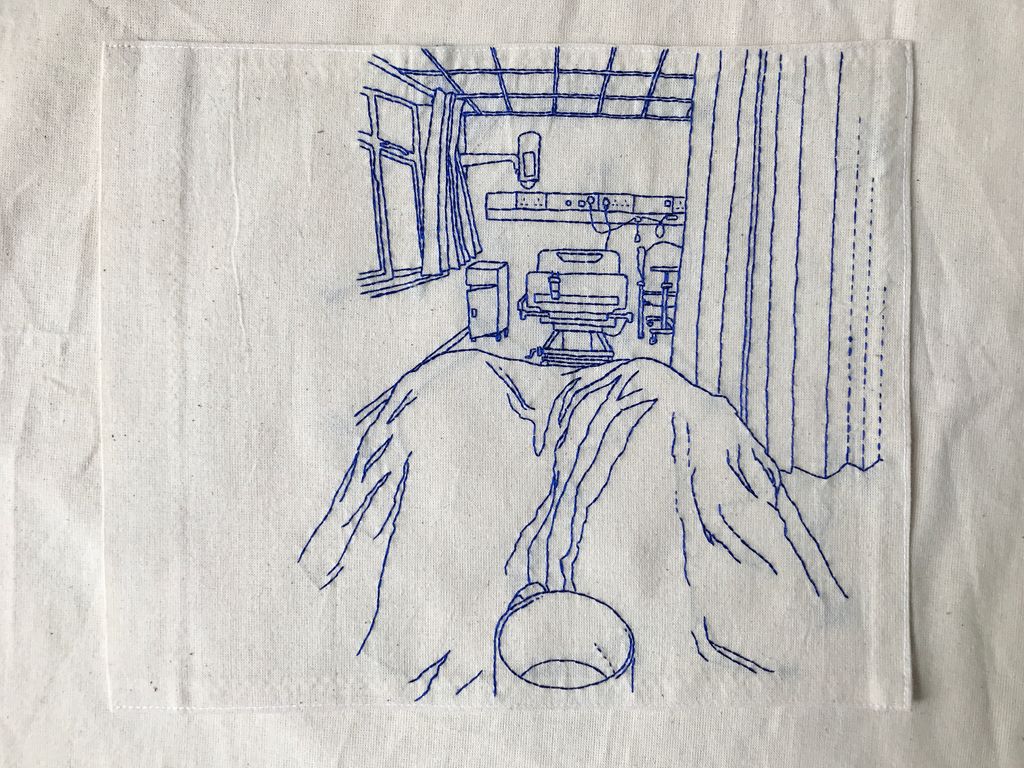 36/44
36/44Leah Jensen: Brain Tumour Book presented by Cavaliero Finn at the Fitzrovia Chapel
In September 2020, Leah Jensen was discovered to have an aggressive brain tumour. This exhibition, presented by Cavaliero Finn at the exquisite Fitzrovia Chapel (once the chapel for the Middlesex Hospital) presents Leah’s chronicling of the fear, acceptance and hope that accompanied her treatment, though intricate embroidery and layered imagery which, in its laying bare of emotion, has been compared to the work of Louise Bourgeois and Tracey Emin. A series of work will be for sale raising funds for The Brain Tumour Charity.
April 17-26; fitzroviachapel.org
Pictured: Leah Jensen, from Brain Tumour Book


%2C%2520%25201970%2520(1)%2520copy.jpg)

- © Charles Best37/44
Kimberley Gundle: My Head is a Fairground at Long & Ryle
Long & Ryle, SW1, is presenting an immersive installation by South African-born artist and sculptor Kimberley Gundle, featuring ceramic portraits, collages, plates, a wallpaper of the artist’s own design, and floor art. The portraits are both inspired by people Kimberley has spotted on the tube (she always carries a sketchbook) and expressions of her own inner thoughts.
April 16-May 15; longandryle.com
Pictured: Kimberley Gundle, We all seek meaning in our lives, 2025
 Matt Alexander38/44
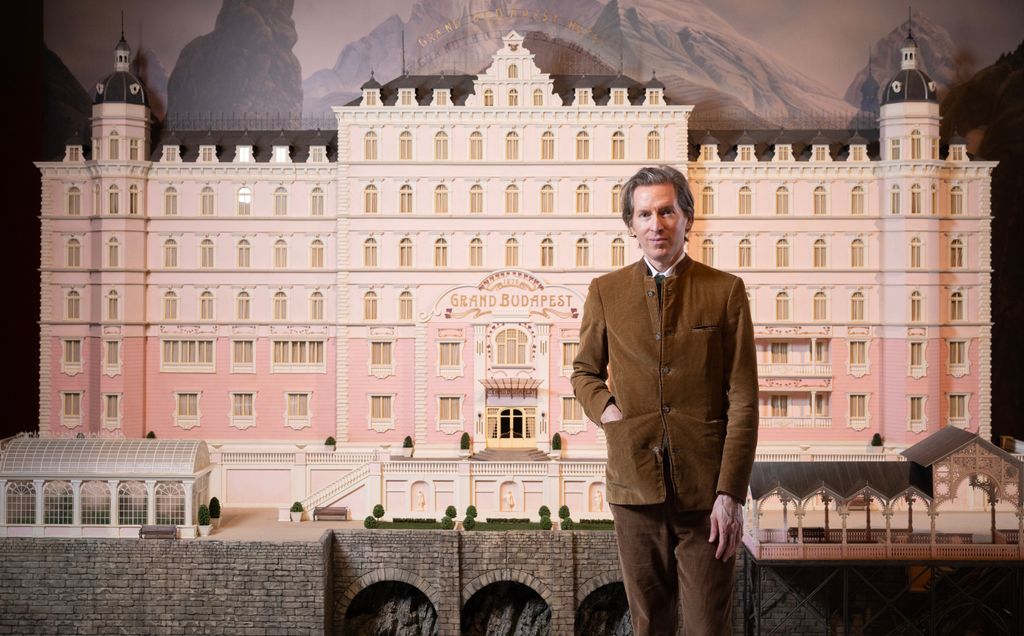
Wes Anderson: The Archives at the Design Museum
Few contemporary film directors have so stoked the imagination of interiors lovers as Wes Anderson – and now the Design Museum, W8, is giving us his first retrospective, produced in collaboration with la Cinémathèque française. Three decades worth of archives chart the evolution of his vision and the design stories behind films including The Grand Budapest Hotel, The Royal Tenenbaums, and Fantastic Mr. Fox. There are sets and props, including a candy pink model of the Grand Budapest Hotel, the Fendi coat worn by Gwyneth Paltrow as Margot Tenenbaum, and the original stop motion fantastical sea creature puppets that featured in The Life Aquatic with Steve Zissou. There is also a screening of Bottle Rocket, the director’s first short film, made in 1993. Booking tickets in advance is strongly advised.
Until July 26; designmuseum.org
Pictured: Wes Anderson at the Design Museum
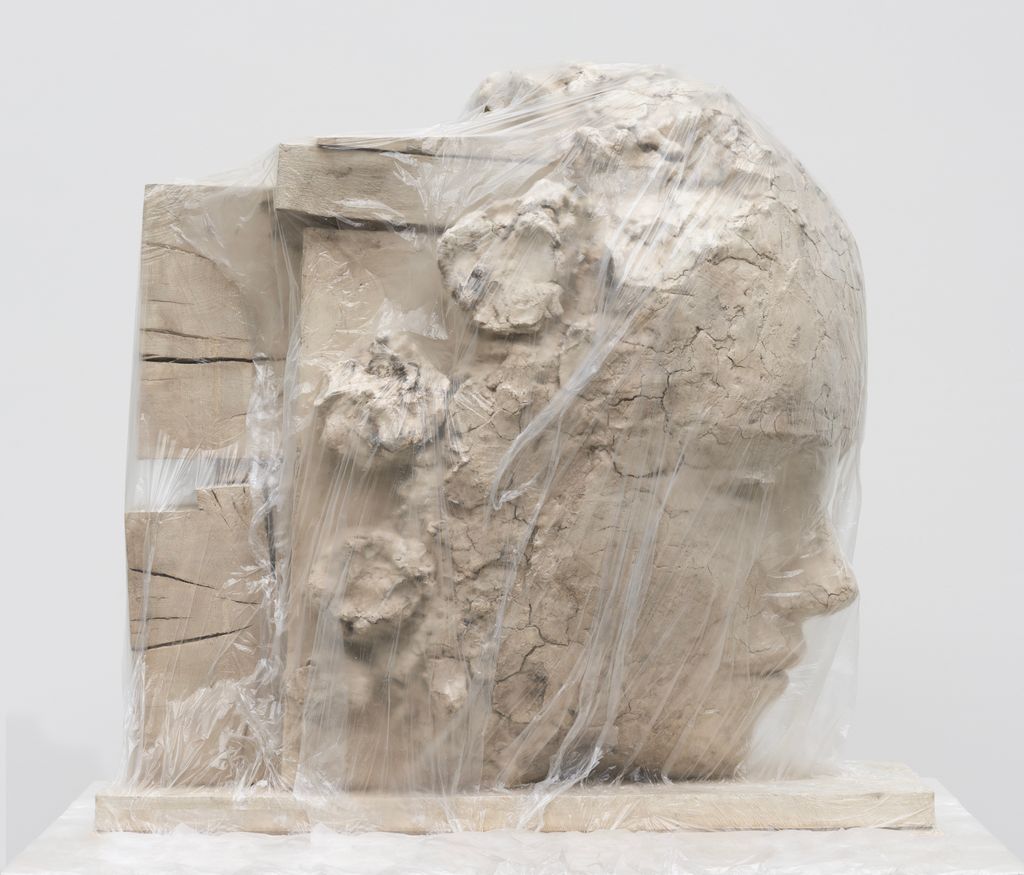 Photo: Simon Bultnyck39/44
Mark Manders: Room with All Existing Words at London Mithraeum Bloomberg SPACE
Mark Manders’ career has seen him developing what he describes as a ‘self-portrait of a building’ – an evolving body of work where sculptures, objects and texts create a cohesive fictional world in which bronze and clay forms seem frozen in mid-construction, and fragments of language suggest meaning without ever fully revealing it. His new site-specific commission, installed above the ancient Temple of Mithras and alongside Roman artefacts, transforms the London Mithraeum Bloomberg SPACE, EC4, into somewhere suspended between past and present.
Until July 4; londonmithraeum.com
Pictured: Mark Manders, Bonewhite Clay Head, 2025-2026
%2520sarah%2520campbell%2520copy%25202.jpg) © Sarah Campbell40/44
© Sarah Campbell40/44Women in Print: 150 Years of Liberty Textiles at William Morris Gallery
William Morris Gallery, which is based in the Arts and Crafts designer’s former home in Walthamstow, E17, is presenting an exhibition conceived in partnership with Liberty. The show surveys the evolving influence and status of women within textiles, while bringing together iconic patters by artists and designers including Althea McNish, Sonia Delaunay, and Lucienne Day. There are over 100 works, spanning garments, fabric, original designs, film, and historic photographs.
Until June 21; wmgallery.org.uk
Pictured: Susan Collier and Sarah Campbell, Quickstep, c1970


%2520Sarah%2520Campbell%2520copy%25202.jpg)
%2520tate.%2520%25c2%25a9%2520succession%2520picasso%2520dacs%2c%2520london%25202025%2520copy.jpg) Tate. © Succession Picasso DACS, London 202541/44
Tate. © Succession Picasso DACS, London 202541/44Theatre Picasso at Tate Modern
This exhibition at Tate Modern, SE1, which celebrates the centenary of his famous painting The Three Dancers, is being staged in a space that has been transformed into a theatre. It is thus paying homage to Picasso’s fascination with performance - he designed sets and costumes for the Ballets Russes, and painted flamenco dancers, circus workers, entertainers, and bullfighters. There are major loans coming from across Europe, some of which have never been seen before in the UK.
Until April 12; tate.org.uk
Pictured: Pablo Picasso, Girl in a Chemise, 1905
 Courtesy Bristol Museum and Art Gallery42/44
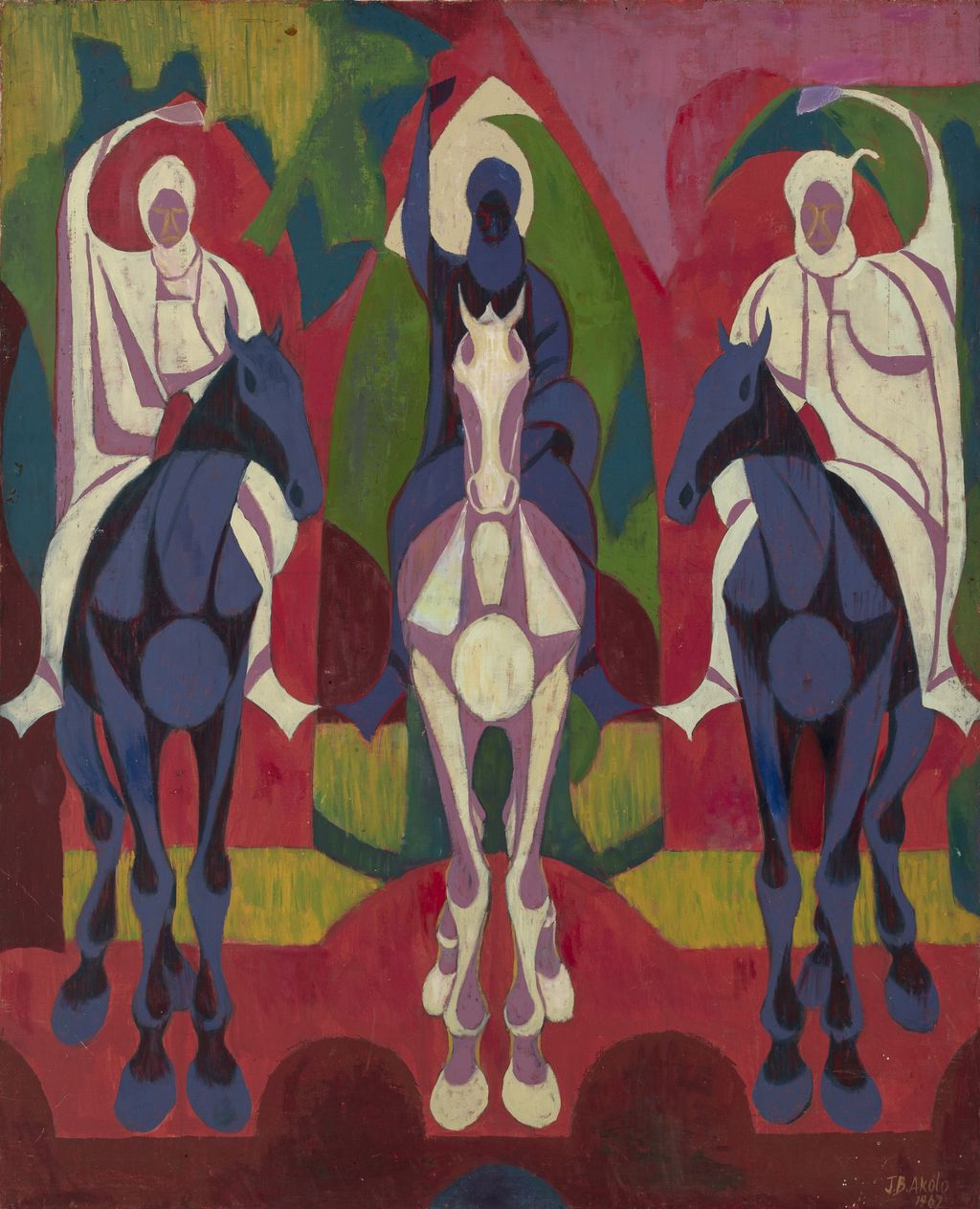
Nigerian Modernism at Tate Modern
At Tate Modern, SE1, this show brings together the work of over 50 artists who were working in the years leading up to and following Nigeria’s 1960 national independence. It tells the stories of different artistic networks, and shows how the fusing of African and European traditions created something vibrant and new.
Until May 10; tate.org.uk
Pictured: Jimo Akolo, Fulani Horsemen, 1962
 © Succession Alberto Giacometti, Adagp, Paris 202543/44
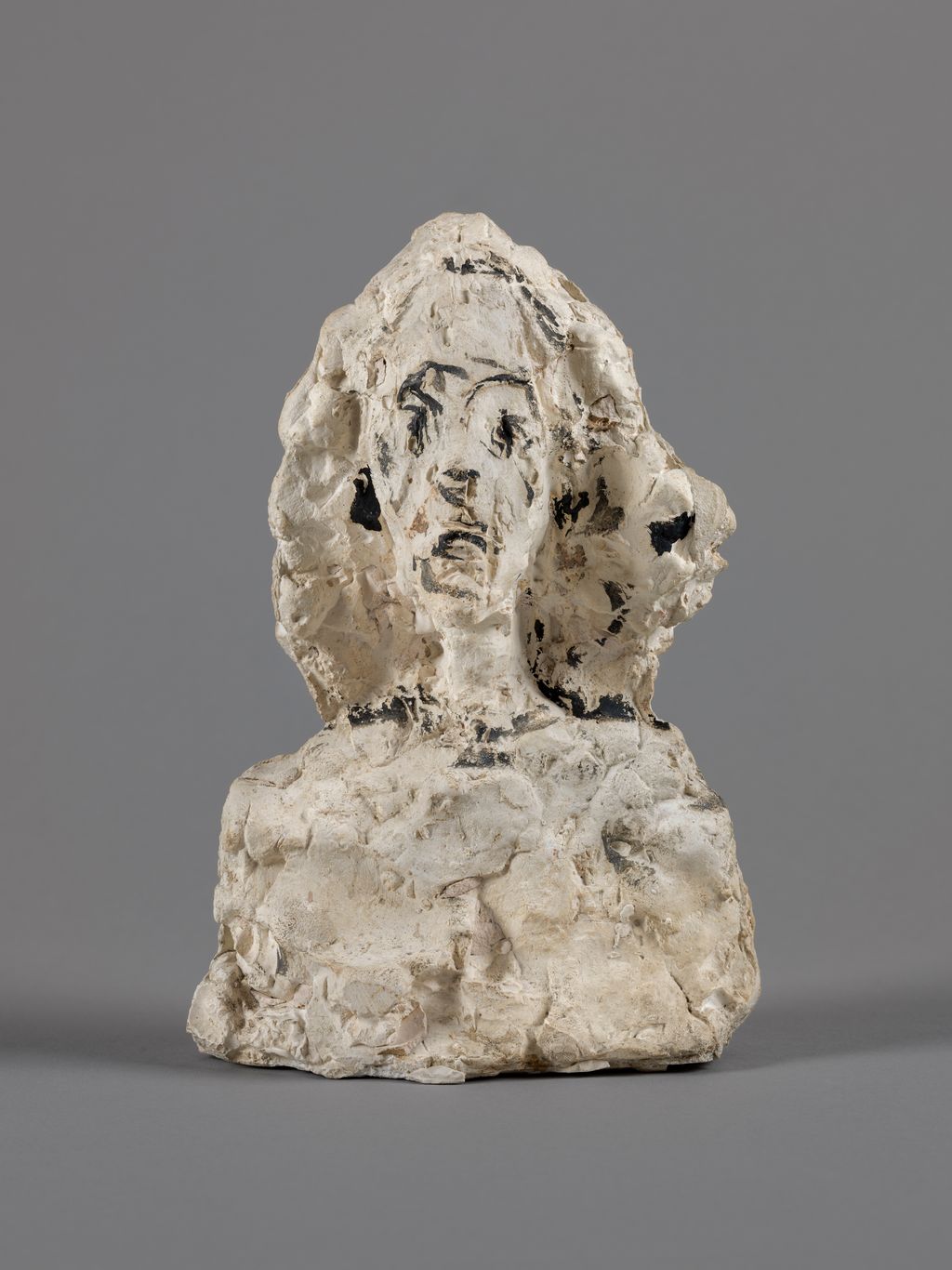
Encounters: Giacometti x Lynda Benglis at the Barbican Centre
The final instalment of three Barbican exhibitions organised in partnership with the Fondation Giacometti, this show presents his work – including Half Length of a Man of 1965 - in dialogue with almost 30 previously unseen works by the American artist Lynda Benglis. Staged in the Barbican’s new Level 2 gallery space, almost a century of artmaking is spanned, and there are sculptures in bronze, ceramic, plaster, painted stone, and handmade paper. Running through both artists’ work is an interest in the human body.
Until May 31; barbican.org.uk
Pictured: Alberto Giacometti, Small Bust of Annette, c1951
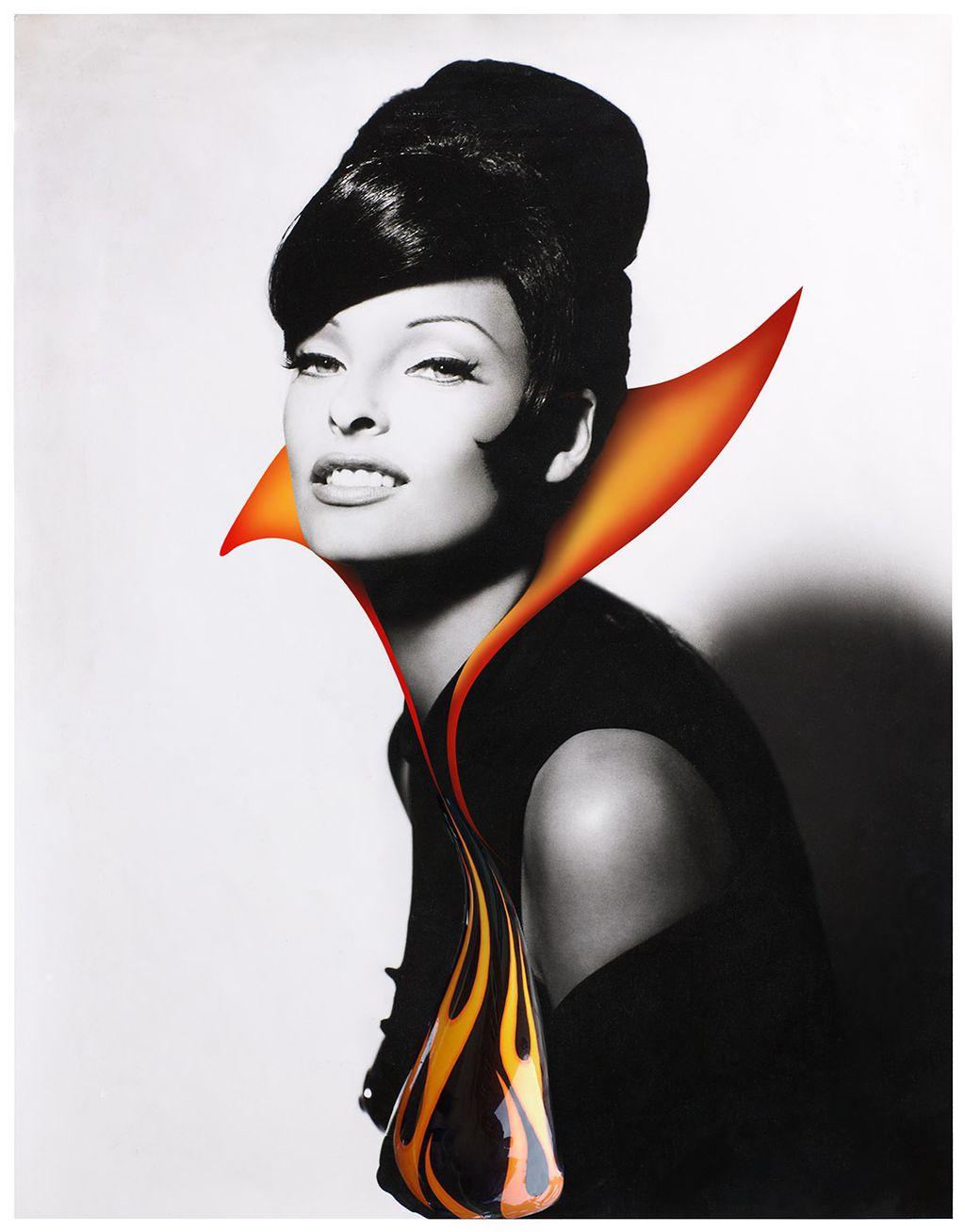 44/44
44/44Indüstria: Glamour and Graphic Imagination at 45 Park Lane
Dorchester Collection’s 45 Park Lane is hosting an exhibition that celebrates the bold glamour and eccentricities of the 1980s and 90s, via the striking works of LA-born photographer Brad Branson, and the Dutch model/ artist Fritz Kok, who collaborated under the name ‘Indüstria’. There are portraits of collages of Vivienne Westwood, Boy George, Jean-Michel Basquiat, Linda Evangelista, Bryan Ferry, Iman – and more.
Until April 26; dorchestercollection.com
Pictured: Indüstria: Too Funky Linda
%2520Tate.%2520%25C2%25A9%2520Succession%2520Picasso%2520DACS%2C%2520London%25202025%2520copy.jpg)


Comments
Back to Top


